10 Days · Kenya · Private Safari

10 Days Kenya
Safari Experience.

From $2,720 per person sharing · low season 2026 rates
10Days
5Destinations
Big FiveAll present
PrivateVehicle
From $2,720per person
5 parks & reserves
Big Five guaranteed
Private vehicle throughout
No obligation to enquire
4.9★ rated
Safari Overview

Five parks.
One extraordinary journey.

This itinerary was designed to show you the full breadth of Kenya — not just one famous reserve, but five completely different ecosystems in a single connected journey. From the rhino-dense highlands of Ol Pejeta and the mountain forests of the Aberdares, to the soda lakes of the Rift Valley and the open plains of the Masai Mara, each destination is distinct.

You begin in the north, in Kenya's most productive rhino sanctuary. You pass through cloud forest and highland moorland. You witness flamingo spectacles along volcanic lake shores. And you finish in the Mara — Africa's most celebrated wildlife reserve — where lion prides rule and the Big Five roam year-round.

Every day is different. Every ecosystem reveals something the previous one could not. This is Kenya in full.

10Days
5Parks
14+Game drives
100%Private
Destinations Visited

Ol Pejeta Conservancy

East Africa's largest black rhino sanctuary — and home to the world's last two northern white rhinos.

Aberdare National Park

Mist-wrapped mountain forest and moorland. Bongo, black rhino, elephant and a world-class tree hotel.

Lake Bogoria

A steaming soda lake ringed by geysers and visited by up to two million flamingos.

Lake Nakuru

Kenya's white rhino sanctuary. Leopard in acacia trees, colobus monkeys, and 450 bird species.

Masai Mara

The world's greatest wildlife reserve. Resident Big Five year-round. The Great Migration July–October.

Why This Itinerary

A complete Kenya circuit.
Nothing left out.

The Rhino Story, Complete

No other 10-day Kenya itinerary gives you both black and white rhino in protected sanctuaries. Ol Pejeta holds 125+ black rhino — the densest population in East Africa — plus the planet's last two northern white rhinos, Najin and Fatu. Lake Nakuru adds another 130+ southern white rhino. The rhinoceros story, told in full.

Five Ecosystems, One Journey

Highland conservancy, equatorial forest, Rift Valley soda lake, freshwater flamingo lake, open savannah grassland. You pass through every major Kenyan habitat type. Most visitors see one or two. This itinerary shows you all five — in a logical north-to-south progression that reads as a complete natural story rather than a disconnected series of stops.

The Mara as Your Grand Finale

Most itineraries begin in the Mara and end somewhere smaller. We reverse this deliberately. After nine days of extraordinary, varied wildlife, you arrive in the Mara for your final act — with the accumulated knowledge of ecosystems, behaviour, and animal encounters to read what you see at a level impossible for first-time visitors. The Mara rewards the experienced eye.

Day by Day

Your journey,
in detail.

01

Nairobi to Ol Pejeta Conservancy

Arrival · Transfer · First Game Drive

Your guide meets you at JKIA or your Nairobi hotel and transfers you north through the Central Highlands — a scenic 245 km drive across the equator to Laikipia Plateau. Arrive at Ol Pejeta Conservancy in the early afternoon. Once settled, an optional late-afternoon game drive introduces you to the open grasslands, acacia woodland and the resident wildlife before the sun sets over the Aberdare Range.

Road TransferPrivate VehicleFirst Sightings

Tonight's lodge: Safari camp or lodge within Ol Pejeta Conservancy — confirmed to your preferences.

02

Ol Pejeta — Full Day

Morning Drive · Rhino Tracking · Afternoon Drive

A full day in Kenya's most successful wildlife conservancy. Ol Pejeta's 90,000 acres support the densest black rhino population in East Africa and the continent's largest chimpanzee sanctuary. Morning drive departs at 6:30am — lion prides use the open grassland in the early light, while black rhino are most active before the heat builds. Afternoon rest at camp, followed by a second drive as the light softens and the conservancy's elephant herds move toward water.

Black RhinoBig FiveLionElephantCheetahBuffalo

Northern White Rhino: Ol Pejeta is home to Najin and Fatu — the last two northern white rhinos on earth. Your guide will brief you on the conservation programme.

03

Ol Pejeta to Aberdare National Park

Morning Drive · Highland Transfer · Tree Hotel

A final early drive in Ol Pejeta, then transfer east into the Aberdare Range — a UNESCO Man and Biosphere Reserve rising to 4,001m. The landscape changes dramatically as you climb: open savannah gives way to bamboo forest, then Afro-alpine moorland. Arrive at your tree hotel — a property built above a waterhole where wildlife comes to drink through the night — and settle in before the evening session begins.

Highland TransferMountain ForestTree Hotel

Tonight's lodge: Aberdare tree hotel — a viewing platform above a floodlit waterhole, operating from late afternoon.

04

Aberdare — Full Day

Waterhole Watch · Forest Drive · Night Spotlighting

The Aberdare forest ecosystem is unlike anywhere else on the itinerary. At 2,300m altitude, mornings are cool and still. The forest drives reveal black-and-white colobus monkeys, giant forest hog, waterbuck, bushbuck and tree hyrax. Black rhino pass through this terrain regularly. The Aberdare is also Kenya's most reliable location for the rare mountain bongo — encounters are not guaranteed, but guides know the routes they travel. The evening waterhole watch, with the lodge's powerful spotlights illuminating the clearing, is one of the great experiences in Kenya.

Mountain BongoBlack RhinoColobusWaterbuckNight WildlifeForest Drive

Tonight's lodge: Second night at the Aberdare tree hotel. The waterhole is active from dusk — elephant, rhino and leopard visits are recorded nightly.

05

Aberdare to Lake Bogoria

Forest Departure · Rift Valley Descent · Flamingo Arrival

Depart the Aberdares and descend west through the Great Rift Valley escarpment — one of the world's great scenic drives, dropping 1,500m through farmland and dry savannah. Lake Bogoria National Reserve comes into view across a flat volcanic plain, its southern shoreline steaming with geysers and hot springs. Arrive in the early afternoon. Your first walk along the lake edge introduces the scale of the flamingo spectacle — the pink horizon stretching further than the eye can resolve.

Rift ValleyScenic TransferFlamingosHot Springs

Tonight's lodge: Property near Lake Bogoria — selected for lakeside access and flamingo viewing.

06

Lake Bogoria — Full Day

Flamingo Walk · Geysers · Greater Kudu

Lake Bogoria is a Ramsar Wetland of International Importance and a UNESCO World Heritage Site. Between 500,000 and two million Lesser Flamingo feed on the blue-green algae that thrive in its alkaline waters, creating one of nature's great spectacles at ground level. The southern end of the lake steams with over 200 geysers and boiling hot springs — a reminder that this is a geologically active landscape. The surrounding thickets shelter Greater Kudu, waterbuck and Defassa's impala. Late afternoon transfer south to Lake Nakuru (50km, approximately 1 hour).

Up to 2 Million FlamingosActive GeysersGreater KuduWaterbuck

Tonight's lodge: Property near Lake Nakuru National Park — game drive into the park begins tomorrow morning.

07

Lake Nakuru — Full Day

White Rhino · Leopard · Colobus Monkeys

Lake Nakuru National Park is a 188 km² sanctuary with the highest density of white rhino in Kenya — over 130 individuals. The park is fenced against poaching, creating an environment where both black and white rhino are seen regularly on game drives. The acacia yellow-fever forests on the lake's northern shore shelter leopards, best spotted in the trees on morning drives. Black-and-white colobus monkeys are common in the fever tree canopy. The lake itself, when conditions favour, holds significant flamingo populations alongside great white pelicans, African spoonbills and marabou storks.

White RhinoLeopardBlack & White ColobusFlamingoLionBuffalo

Tonight's lodge: Second night near Lake Nakuru — both game drives today are in the park.

08

Lake Nakuru to Masai Mara

Morning Drive · Rift Valley Transfer · Mara Arrival

Final morning drive in Nakuru, then transfer south through the Rift Valley — past Lake Naivasha, through Narok town, and into the wide open Mara ecosystem. The road transition from highland farmland to Mara grassland is one of Kenya's most dramatic. Arrive at your Mara camp in the early afternoon. An optional late-afternoon drive takes you onto the plains as the light turns golden — the savannah at its most photogenic, and the wildlife active again after the midday heat.

Long Transfer DayRift ValleyMasai Mara Arrival

Tonight's lodge: Masai Mara camp — mid-range or luxury, confirmed to your preference. Two nights in the Mara.

09

Masai Mara — Full Day

Morning Drive · Afternoon Rest · Sundowner Drive

A full day in Africa's most celebrated wildlife reserve. The Masai Mara's 1,510 km² support the continent's highest density of large predators — multiple lion prides, resident leopard along the Mara River, cheetah on the open plains, and spotted hyena in large numbers. Morning drive at 6:30am targets predator activity in the cool of the early day. Back at camp by mid-morning for breakfast and rest. An afternoon sundowner drive returns as the light drops and temperatures cool — often the most productive hours of the day.

Big FiveLion PridesLeopardCheetahElephantGreat Migration

Optional add-on: Hot air balloon over the Mara at dawn — one of the great safari experiences. See details ↓

10

Masai Mara to Nairobi

Final Morning Drive · Transfer · Departure

One final early drive before departing the Mara. The road transfer back to Nairobi takes approximately 5–6 hours through Narok and the edge of the Rift Valley, arriving in time for evening flights or a final night in the city. If your flight is late, your guide can arrange a morning visit to the Nairobi Elephant Orphanage or a quiet farewell breakfast in Karen before the airport run.

Final Morning DriveTransfer to NairobiJKIA Departure
What You Will See

Wildlife across
five ecosystems.

Each park on this itinerary has its own cast of animals. Select a destination to explore what awaits you — and how reliably each species is encountered.

The Masai Mara supports the highest density of large predators in Africa. Over 95 mammal species and 470+ bird species are recorded here. Big Five sightings are reliable year-round — the Mara is the only park on this itinerary where all five are present simultaneously throughout the year.

Lion Certain Multiple resident prides, year-round
Elephant Certain Large herds, daily sightings
Cape Buffalo Certain Thousands in the ecosystem
Leopard Likely Riverine forest, especially early morning
Cheetah Likely Open plains, resident coalitions
Wildebeest Certain Resident herds; migration Jul–Oct
Hippo Certain Mara River — hundreds year-round
Masai Giraffe Certain Acacia grassland, daily
Zebra Certain Plains herds, thousands year-round
Black Rhino Possible Private conservancy areas only

Ol Pejeta's 90,000-acre conservancy holds the densest black rhino population in East Africa — 125+ individuals — alongside a complete Big Five and the planet's last two northern white rhinos. The fenced sanctuary creates unusually reliable wildlife sightings in open grassland and acacia bush.

Black Rhino Certain 125+ individuals — highest density in E. Africa
White Rhino Certain Southern white rhino + last 2 northern white
Elephant Certain Resident herds, daily sightings
Cape Buffalo Certain Large herds on the grasslands
Lion Likely Resident prides, open grassland
Cheetah Likely Open plains, well-documented individuals
Spotted Hyena Likely Active at dawn and dusk
Hippo Likely Ewaso Nyiro River crossing the conservancy
Zebra Certain Mixed herds with wildebeest
Reticulated Giraffe Certain Different subspecies to the Mara

Lake Nakuru National Park is a fenced sanctuary holding 130+ southern white rhino — the highest concentration in Kenya. The park's combination of lake, fever-tree forest, open grassland and rocky escarpment produces remarkable biodiversity, including reliable leopard sightings in the acacia canopy and rare black-and-white colobus monkeys.

White Rhino Certain 130+ individuals in fenced sanctuary
Leopard Likely Acacia & fever-tree canopy, morning drives
Black & White Colobus Certain Forest areas near the lake's north shore
Cape Buffalo Certain Large herds, reliably sighted
Lion Likely Resident prides, grassland areas
Flamingo Likely Numbers vary; most reliable Sep–Mar
Waterbuck Certain Common near the lakeshore
Olive Baboon Certain Large troops throughout the park
Great White Pelican Certain Flocks on the lake, year-round
African Fish Eagle Certain Calls year-round from lakeshore trees
Also Available

Optional experiences

Enhance your safari
Four unforgettable additions — any can be built into your itinerary before or after departure.
Masai Mara · Day 9 or 10
Hot Air Balloon — Masai Mara
Drift over the Mara at first light, watching herds move across the plains 300 metres below. One hour flight followed by a champagne bush breakfast.
Ol Pejeta · Day 2
Rhino Tracking on Foot
Walk with a trained ranger to approach black rhino on foot — a rare close encounter possible only in Ol Pejeta's sanctuary conditions. Maximum 6 guests.
Aberdare · Day 3 or 4
Night Game Drive — Aberdare Forest
Spotlight-assisted after-dark drive through the mountain forest. Giant forest hog, porcupine, serval, leopard and the elusive bushbaby are all active after sunset.
Lake Nakuru · Day 7
Boat Safari — Lake Nakuru
A one-hour motorboat excursion on the lake's open water. Close passes of pelican flocks, flamingo feeding lines and — if numbers are strong — a pink horizon that stretches in every direction.
Where You Stay

Lodges & camps
across your route.

Each property is chosen for its location relative to the wildlife, the quality of the guiding, and access to the activities that make each destination special. Exact properties are confirmed at booking.

Featured

Sweetwaters Tented Camp

Ol Pejeta Conservancy · Days 1–2

Set beside a floodlit waterhole at the heart of Ol Pejeta, Sweetwaters offers tented accommodation with direct views of rhino and elephant from the terrace. The camp's position within the conservancy means game drives begin and end steps from your tent. The waterhole is active throughout the night.

Tree Hotel

The Ark or Treetops

Aberdare National Park · Days 3–4

Built above a natural waterhole and salt lick in the Aberdare forest, these tree hotels are a unique safari experience — accommodation and wildlife viewing merged into a single concept. An alarm system alerts guests to significant arrivals overnight. Elephant, rhino, buffalo and leopard visit regularly after dark.

Rift Valley

Flamingo Hill Tented Camp

Lake Bogoria & Nakuru · Days 5–7

Positioned near Lake Bogoria and within easy reach of Lake Nakuru, Flamingo Hill provides comfortable tented accommodation with views over the Rift Valley escarpment. Early morning drives to the lake edge are possible before the day-visitor crowds arrive, and flamingo sightings from camp are common.

Grand Finale

Sarova Mara Game Camp

Masai Mara · Days 8–10

Located inside the Masai Mara National Reserve, Sarova Mara's position ensures game drives begin immediately — no transit time outside the reserve. The camp has long been established as one of the Mara's most reliably located mid-range properties, with access to the core wildlife areas favoured by lion prides and cheetah.

What's Included

Everything covered.
No surprises.

Included
  • All park, conservancy and reserve entry fees — all 5 destinations
  • Private 4×4 Land Cruiser with pop-up roof — exclusive to your group throughout
  • Professional English-speaking driver-guide (Kenya Wildlife Service certified)
  • 10 nights accommodation — tented camps and lodges as specified
  • Full board from Day 1 dinner to Day 10 breakfast
  • All road transfers between destinations
  • Airport pick-up and drop-off (JKIA or city hotel)
  • Drinking water throughout every game drive
  • 24-hour emergency support from our Nairobi team
Not Included
  • International flights to and from Nairobi
  • Kenya Electronic Travel Authorisation (ETA) — approx. $32.50 pp
  • Travel insurance (compulsory — must cover medical repatriation)
  • AMREF Flying Doctors membership (strongly recommended, ~$25 pp)
  • Optional experiences — balloon, rhino tracking, night drive
  • Gratuities for guides and camp staff
  • Alcoholic beverages and personal items
  • Any pre- or post-safari nights in Nairobi
Tip guideline: Safari guide $20–30 per group per day; camp staff $5–10 per guest per night. Tipping is discretionary and deeply appreciated.
Pricing

Group size
determines your price.

One vehicle, one guide, shared cost. Larger groups bring the price per person down significantly.

2 People

$3,650
per person · 10 nights
  • Private vehicle (2 passengers)
  • All 5 parks included
  • Full board throughout
  • Airport transfers
Most Popular

4 People

$2,950
per person · 10 nights
  • Private vehicle (4 passengers)
  • All 5 parks included
  • Full board throughout
  • Airport transfers

6 People

$2,720
per person · 10 nights
  • Private vehicle (6 passengers)
  • All 5 parks included
  • Full board throughout
  • Airport transfers

Prices are per person in USD, based on shared private vehicle. Rates valid for 2026 departures. Peak season surcharges (July–October) may apply — confirm at enquiry. Children under 12 receive reduced rates.

Guest Voices

Experienced. Trusted.
Remembered.

Rated 4.9/5 from independent review sources

Travel With Awareness

When you go
changes everything.

The timing of your safari affects far more than price or wildlife sightings. It directly shapes your impact on the ecosystems you are visiting — the soil, the animals, the communities that live alongside them. We believe you deserve an honest picture.

Ecosystem Impact Scale

Low impact — wildlife undisturbed, ground undamaged, community-positive
Moderate impact — manageable pressure, worth considering alternatives
High impact — overcrowded, soil damage possible, animal stress evident
Migration Peak — River Crossings July – October
Ecosystem pressure High
50–100+ vehicles per crossing Soil erosion at crossing points Animals diverted by vehicle noise Most spectacular wildlife event
Dry High Season January – March
Ecosystem pressure Moderate
15–30 vehicles at sightings Resident wildlife at peak Short grass — ideal visibility Lower prices than peak
Green Season — Lowest Impact April – June
Ecosystem pressure Low
Often 1–3 vehicles at sightings 30–50% lower prices Animals behave naturally Afternoon rain possible Longer grass reduces visibility

Our Recommendation

For low impact without sacrificing wildlife: January–March or April–June

Both periods offer outstanding Masai Mara experiences with a fraction of the vehicle pressure. January–March gives you peak resident wildlife in pristine short-grass conditions. April–June gives you something rarer still — the Mara almost entirely to yourself, with animals that have never learned to associate vehicles with crowds.

Wildlife Presence by Month — Masai Mara

Lion

JanDec

Wildebeest Migration

JanDec

Cheetah

JanDec

Good  Reduced  Absent

Average vehicle density at popular sightings

Jul–Oct
50–100+
Jan–Mar
15–30
Apr–Jun
1–5

Each dot = ~5 vehicles. Data based on guide field observations 2022–2025.

Dry Season — Best Big Five Visibility January – March, June – October
Ecosystem pressure Low
Vehicle permit system limits numbers Black rhino most active in cool mornings Short grass — ideal for cheetah sightings Rarely more than 6 vehicles at sightings
Green Season — Lush & Quiet April – May, November
Ecosystem pressure Very Low
Fewest visitors of the year Landscape at its most photogenic Calving season — young animals present Longer grass reduces sighting distance

Our Recommendation

Ol Pejeta is low-impact year-round — choose based on overall itinerary timing

Unlike the Masai Mara, Ol Pejeta's impact profile does not vary dramatically by season. The private conservancy model ensures vehicles are always limited. Your dates in Ol Pejeta are best chosen based on when you want to be in the Mara — and we can advise on the optimal sequence for your group.

Wildlife Presence — Ol Pejeta

Black Rhino

JanDec

Cheetah

JanDec

Lion

JanDec

Good  Reduced  Absent

Vehicle density at wildlife sightings — Ol Pejeta

Year-round
2–6

Ol Pejeta's permit-controlled system caps daily vehicle entries. Sightings of 10+ vehicles at a single animal are rare. The rhino encounters are quiet, close and unhurried.

Peak Weekend Pressure School Holidays & Public Holidays
Ecosystem pressure Moderate–High
Nairobi day-trippers flood the park 20–40 vehicles at rhino sightings Traffic congestion at gate Wildlife is still present and sightings reliable
Weekday Visits — Low Impact Any season, Monday–Friday
Ecosystem pressure Low
Often fewer than 5 vehicles at rhino Flamingo on the lake undisturbed Leopard sightings calm and unrushed Gates open without queues

Our Recommendation

Weekday mornings, dry season — Nakuru at its quietest and best

The park's best wildlife experiences happen on weekday mornings between 6:30am and 10:00am. Dry season (June–October, January–March) concentrates animals near the lake and reduces grass height for better visibility. This itinerary's structure naturally places most groups in Nakuru on weekdays.

Wildlife Presence — Lake Nakuru

White Rhino

JanDec

Flamingo (numbers variable)

JanDec

Leopard

JanDec

Good  Variable  Absent

Vehicle density — weekday vs. weekend

Weekday
3–8
Weekend
20–40

Each dot = ~4 vehicles. Weekend figures based on peak public holiday periods. This itinerary is structured to visit Nakuru on weekdays.

Too many vehicles stress wildlife

When 50+ vehicles surround a lion pride or block a wildebeest crossing, animal behaviour changes. Hunts are abandoned. Crossings are delayed. Crowding is not neutral — it has a measurable effect on the animals you have come to observe.

Soil compaction damages ecosystems

Vehicle weight and repeated off-track driving compact soil, reducing water absorption and damaging root systems. The Mara River banks near popular crossing points show visible erosion from vehicle pressure. Choosing lower-traffic seasons and staying on designated tracks makes a direct, measurable difference.

We share this because it matters to us

Safari Travel Plus is a Kenyan family business. These are the landscapes our children will inherit. We believe you have the right to understand the impact of when you travel, and to choose accordingly. We will always be honest with you, even when that means recommending a quieter season over a premium one.

Your Safari Vehicle

Built for the
African bush.

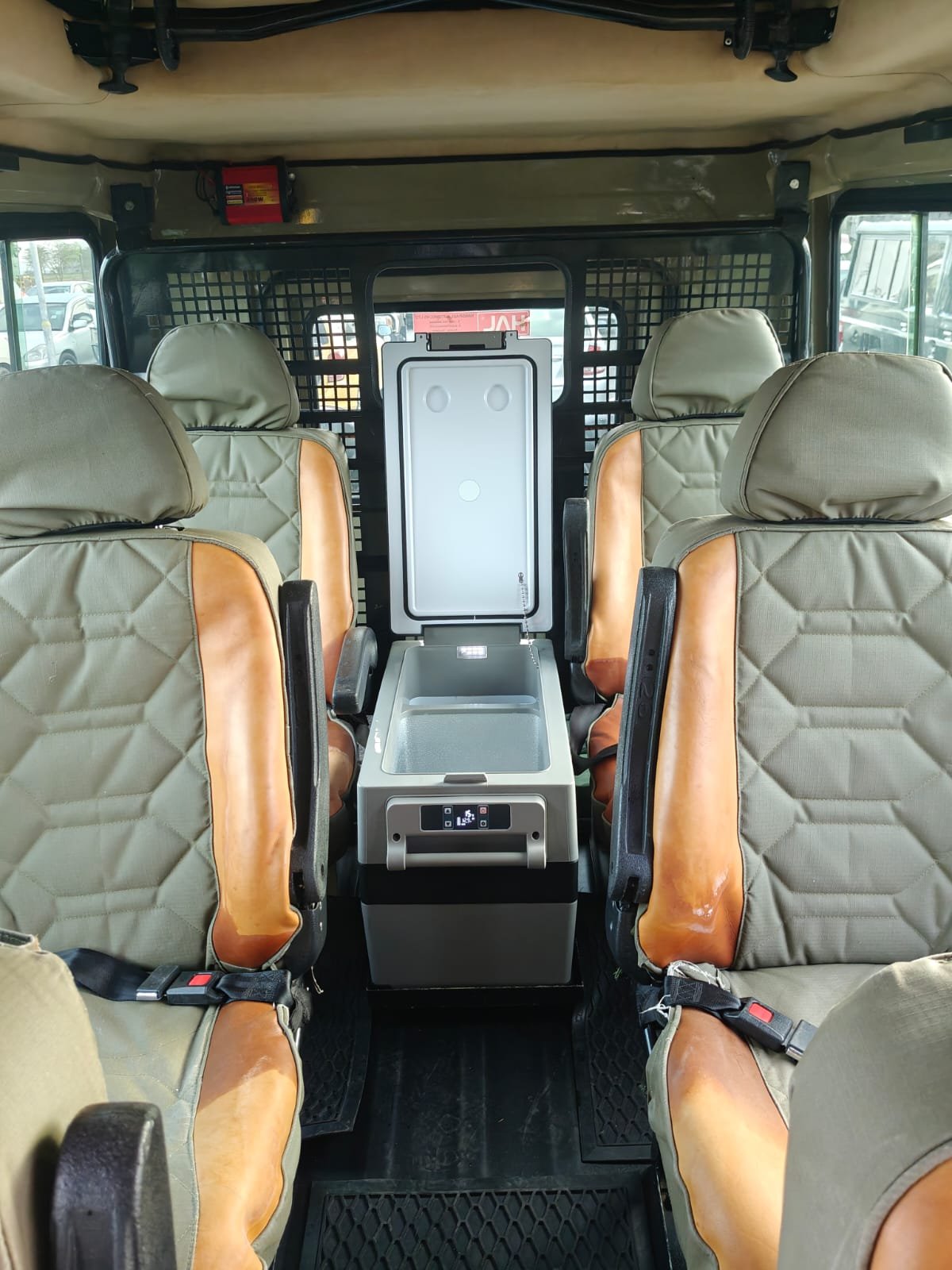
Every drive on this safari takes place in a custom-fitted Toyota Land Cruiser — Kenya's most trusted safari vehicle. Modified specifically for senior comfort: lower entry, firm seating, and every practical detail considered before you even reach the reserve.
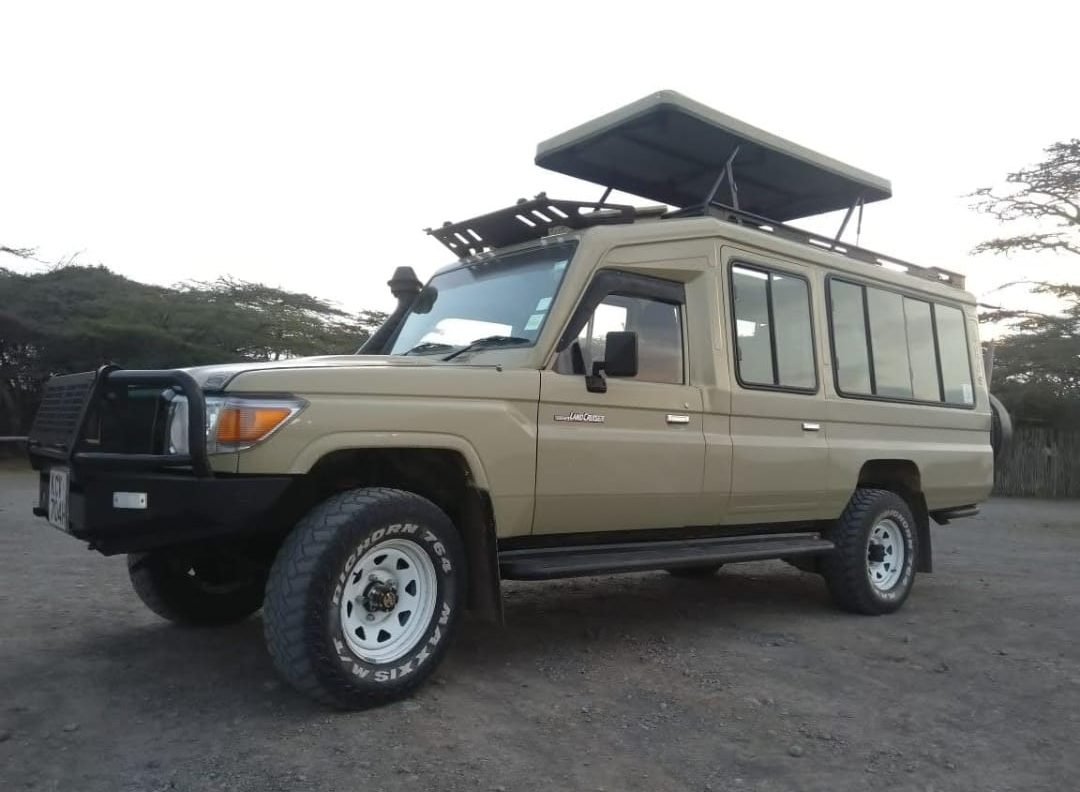
Our custom Toyota Land Cruiser safari vehicle Exterior — Custom Toyota Land Cruiser
Inside our safari Land Cruiser — leather seats and on-board cool box Interior — Leather seats & cool box
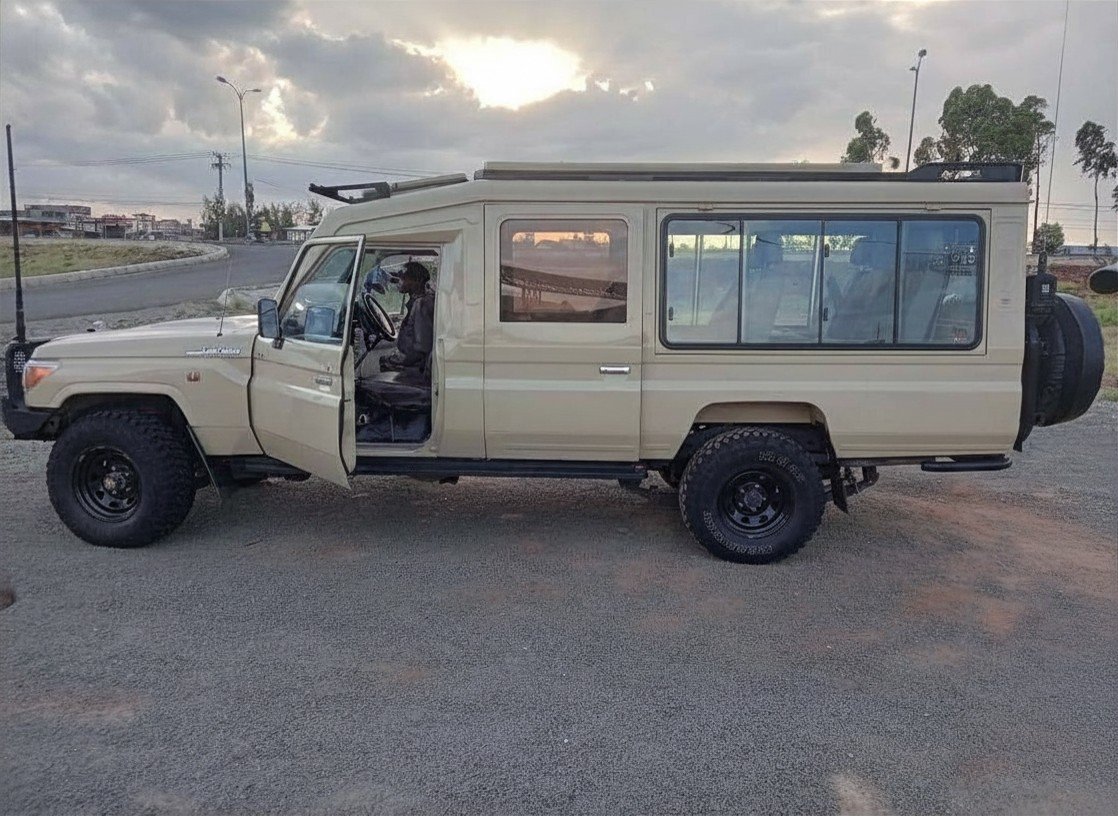
Our custom Toyota Land Cruiser on safari in Kenya On safari — Masai Mara

3-Step Fold-Down Entry

Purpose-built folding step system with a sturdy grab handle at door height. Tested for safe entry and exit at every vehicle stop — no stepping up from the ground.

Elevated Captain Seats

Firm, upright seating positioned higher than standard passenger vehicles — easier to lower into, easier to rise from. Individual armrests and adjustable lumbar support.

Full Pop-Up Roof

The entire roof lifts open for unobstructed 360° wildlife viewing and photography. A game drive is experienced standing, not craning through a window. Closes in seconds when it rains.

USB & 12V Charging

Multiple USB-A, USB-C, and 12V socket charging points throughout the vehicle — keep cameras, phones, hearing aids, and medical devices charged across every full-day drive.

Cool Box & Water Supply

Chilled drinking water available throughout every drive — not just at stops. The on-board cool box holds water, snacks, and where applicable, cold towels for midday comfort.

Full First Aid Kit On Board

Every vehicle carries a comprehensive first aid kit and your guide holds a current first aid certificate. AMREF Flying Doctors emergency numbers are pre-saved in every guide's phone.

100% Private — Always

This vehicle is never shared. No strangers, no compromises on timing, no waiting for others. You set the pace of every drive, every stop, and every return to camp.

4-Wheel Drive Throughout

Genuine 4×4 traction is essential in the Mara and Amboseli — especially after rain. The Land Cruiser handles rutted tracks, river crossings, and off-road terrain that no minivan or saloon could navigate.

Maximum 6 Passengers

The Land Cruiser seats up to 6 comfortably, with full pop-roof access for everyone. For groups of 2–4, you'll find significantly more space per person — ideal for extended game drive comfort.

Pre-Departure Safety Check

Every vehicle undergoes a full mechanical inspection before each safari departs. We carry a spare tyre, tow rope, and basic repair kit as standard. In 15 years we have never abandoned a client on the road.

Health & Safety

Health & Medical
Information

We share this not to discourage travel, but to ensure you arrive prepared, confident, and with the right coverage in place.

Before You Travel

  • Pre-travel consultation with your GP — especially for malaria prevention, which varies by existing health conditions
  • Malaria prophylaxis is essential — discuss options with your doctor well in advance, allowing time to start the course correctly
  • Altitude awareness: Nairobi (1,795m), Naivasha (1,884m), Mara (1,500–1,700m). Discuss with your doctor if you have heart or lung conditions
  • Travel insurance must cover pre-existing conditions, emergency medical treatment in Kenya, and full medical repatriation

AMREF Flying Doctors — strongly recommended. A short-term membership costs approximately $25 per person and provides emergency air evacuation across East Africa. Without it, an air evacuation to Nairobi costs $15,000–$25,000. We arrange this as part of your booking process.

Nearest Medical Facilities

  • NairobiNairobi Hospital and Aga Khan University Hospital — both world-class private facilities
  • Lake NaivashaNaivasha District Hospital — approximately 15 minutes from lakeside camps
  • Masai MaraNarok County Referral (1.5–2hrs road); air evacuation to Nairobi ~45 minutes
  • AmboseliLoitokitok District Hospital approximately 45 minutes by road
Preparation

What to Pack

Clothing

  • Comfortable neutral layers — khaki, olive, beige
  • Warm fleece or light jacket for early mornings
  • Wide-brimmed sun hat and high-SPF sunscreen
  • Comfortable, supportive flat footwear — easy on and off
  • Compression socks for the flights
  • Light rain jacket for Naivasha in wetter months

Safari Essentials

  • Binoculars — essential and transformative for game viewing
  • DEET-based insect repellent for malaria zones
  • Reusable water bottle
  • Small day bag for game drives
  • Camera or phone with a good zoom
  • Charging cables and portable power bank

Medical & Documents

  • All prescribed medications with copies of prescriptions
  • AMREF Flying Doctors membership documentation
  • Travel insurance documents — accessible, not packed away
  • Small torch or headlamp for camp after dark
  • Power adaptor for Kenya (Type G, British standard)
  • Any mobility aids used regularly at home
Pre-Departure

Before You Fly

Everything you need to arrange, know, and bring — so you arrive ready to enjoy every moment from the first morning.

Kenya Entry — Electronic Travel Authorisation

Since January 2024, Kenya no longer issues traditional visas. All international visitors apply online for an ETA before departure. Apply at etakenya.go.ke — allow 3 working days for approval.

ETA Application Steps
Passport valid for 6+ months beyond arrival — with one blank page
Recent passport-style photo or clear selfie taken during application
Full travel itinerary: arrival date, departure date, accommodation details
Credit or debit card for the $34.09 fee (includes bank processing charge)
Yellow Fever certificate if arriving from an endemic country
Upload your accommodation booking confirmation

Children included: All travellers — including children — require their own ETA. For under-18s, a parent or guardian completes the application. Apply as a group at the same time. We recommend applying as soon as flights and accommodation are confirmed.

Health Preparation
  • GP consultation — at least 6 weeks before travel. Discuss malaria prophylaxis, altitude awareness, and whether your existing medications need adjusting for the East Africa climate.
  • Malaria prevention — all safari areas require prophylaxis. The right choice depends on your health profile and existing medications — your doctor advises. Begin the course before departure as instructed.
  • Vaccinations — Yellow Fever (required if arriving from endemic areas), Hepatitis A & B, Typhoid, and tetanus are commonly recommended. Confirm with a travel health clinic.
  • Travel insurance — must cover: medical treatment in Kenya, emergency evacuation, repatriation, and trip cancellation. Pre-existing conditions must be declared and covered.
  • AMREF Flying Doctors (~$25 per person) — provides emergency air evacuation across East Africa. Without cover, an air transfer to Nairobi costs $15,000–25,000. We arrange enrolment as part of your booking.
Packing Essentials
  • Neutral clothing — khaki, olive, beige, stone. Layers are key: mornings at 7am can be cool (12–15°C), afternoons warm (25–27°C). One smart-casual outfit for lodge dinners.
  • Power adapter — Kenya uses UK-style 3-square-pin plugs (Type G, 240V). Most lodges switch generators off between 11pm and 6am. Charge all devices before turning in.
  • Small torch / headlamp — essential for moving between tent and facilities after dark. Lodge grounds are unlit for a reason — it keeps wildlife passing through.
  • Binoculars — genuinely transformative. An 8×40 or 10×40 pair is ideal. A leopard in a tree at 200 metres becomes an entirely different experience.
  • DEET insect repellent — apply every evening without fail. Mosquitoes are most active after sunset and before dawn.
  • Sunscreen SPF 50+ — Kenya sits on the equator. The sun is intense year-round and at altitude. Wide-brimmed hat essential for game drives with the roof open.
  • Prescription medications — always in hand luggage with copies of prescriptions. Carry enough for the full trip plus several days extra.
Leave These at Home
  • Plastic bags — strictly banned in Kenya. Customs officers at JKIA confiscate them on arrival — including bags from airport Duty Free. Use fabric, paper, or waterproof non-plastic alternatives for packing.
  • Drones — prohibited in all national parks and reserves without a permit. Do not carry one unless you have arranged official authorisation in advance.
  • Bright white or neon clothing — startles wildlife on game drives. Strong colours can also attract certain insects in specific areas of the parks.
  • Heavy hard-shell suitcases — if your itinerary includes a bush flight to the Mara, luggage is limited to 15 kg per person in soft-sided bags only. Hard cases are not permitted on light aircraft. We can store excess bags at our Nairobi office.
  • Strong perfumes or colognes — attract insects, particularly in camp environments at dusk and dawn.
Kenya Time
GMT+3 (East Africa Time). No daylight saving. London is 3hrs behind in winter, 2hrs in summer. New York is 8hrs behind.
Electricity
240V · Type G plugs (3 square pins). Lodges run generators — typically off between 11pm and 6am. USB charging available in your vehicle throughout.
Language
English is the official language and spoken everywhere. Kiswahili is the national language. Your guide speaks fluent English throughout.
Climate at a Glance

Kenya Weather — Month by Month

All figures are averages for Nairobi / safari areas. Coastal and lakeside temperatures vary slightly. Rains are tropical — brief downpours, not all-day grey skies.

Jan
26° 58mm
Feb
27° 50mm
Mar
27° 92mm
Apr
25° 242mm
May
24° 190mm
Jun
23° 39mm
Jul
22° 18mm
Aug
23° 24mm
Sep
25° 31mm
Oct
26° 61mm
Nov
24° 150mm
Dec
24° 108mm
Dry / warm
Long rains (Apr–May) or short rains (Nov)
Cool & dry — peak safari season

Night temperatures drop to 9–13°C year-round. A warm layer is always needed for early morning drives. Bar heights indicate temperature, numbers indicate average monthly rainfall.

Good to Know

Practical Information

The small things handled before you arrive make for a smoother, more relaxed experience on the ground.

Money & Currency

Kenya's currency is the Kenyan Shilling (KSH). US Dollars, Euros and British Pounds are accepted at all lodges, camps and most tourist outlets. Most major credit cards (Visa, MasterCard, Amex) are accepted everywhere on your itinerary.

  • ATMs in Nairobi accept Visa and MasterCard for KSH withdrawals
  • Best exchange rates at Forex bureaux at the airport — not at hotels
  • Small KSH or USD cash is useful for curio markets and personal tips
  • All your lodge bills are pre-paid — you should need very little cash day to day

Park & Conservancy Fees

Every park and conservancy on this itinerary — Masai Mara, Lake Naivasha and Amboseli — charges entry fees set by the government or conservancy authority. These fees are reviewed and can change without prior notice.

Already covered in your quote. All park and conservancy entry fees for this itinerary are included in the price you receive from us. There are no gate surprises. Your guide handles all payments on your behalf — you simply enjoy the experience.

Connectivity & Communication

  • Mobile signal — good in Nairobi, partial around Naivasha. Limited or absent in the Mara and Amboseli bush. This is a feature, not a problem.
  • Lodge WiFi — most properties offer WiFi in common areas. Speeds are modest. Do not rely on it for video calls.
  • In-vehicle charging — USB-A, USB-C and 12V outlets in your Land Cruiser throughout every drive
  • Emergency contact — your guide carries a satellite-capable device. Our 24/7 in-destination line is +254 737 559 620

Lodge Check-In & Check-Out

Standard times across the properties on your itinerary:

  • Check-in: from 12:00 noon — rooms available on arrival
  • Check-out: by 10:00 am — luggage stored if you have a later departure
  • Early arrivals are welcomed with a welcome drink and lunch while rooms are prepared
  • On departure days your vehicle is available from first light for a final game drive
Your guide manages all check-in documentation on arrival. You go straight to the welcome area — no queues or paperwork.

Laundry & Daily Life

  • Laundry service available at every lodge where two or more nights are spent — usually returned same day
  • Pack light — everything can be washed on the road
  • Meals: all-inclusive from lunch on Day 1 through lunch on Day 7. Soft drinks, beers and wines at lodge bars are settled directly by you at check-out
  • Tea and coffee served at the lodge before early morning drives
  • Picnic lunches provided on full game-drive days in the vehicle
  • Special dietary requirements catered for — please advise us at the time of booking

Responsible Safari

  • Your vehicle stays on designated tracks at all times — off-road driving is prohibited and damaging
  • No feeding wildlife — it disrupts natural behaviour and creates dependence
  • Photography without flash — especially around cats at dawn
  • Keep voices low at sightings — allow wildlife to behave naturally
  • Lodge water conservation: many camps operate on borehole water. Short showers are appreciated
  • Support local: curio purchases from community markets directly benefit the families around the parks
Gratuity Guide — Suggested Amounts
Safari Driver / GuidePaid at the end of your safari, in cash
$10–15 per person / day
Lodge Room StewardIf providing exceptional individual service
$5–10 per night
Bar & Restaurant StaffIndividual waiters at lodge bar
$1–2 per drink / meal
Maasai Village VisitPaid directly to the village community
$20 per person
Service charges are included in all lodge and hotel bills. Tipping is entirely at your discretion — the amounts above reflect what guests on comparable itineraries typically give. USD cash is preferred and always appreciated.
Common Questions

Everything
you need to know.

Straightforward answers to the questions most travellers ask before booking. If something isn't covered here, your enquiry goes directly to our Nairobi team.

Have a question not listed here? We respond to all enquiries within 24 hours — usually much faster.

Ask us directly →

The itinerary works well year-round, but the optimal timing depends on your priorities. For the Great Migration in the Masai Mara, travel July–October — but expect higher prices and more vehicles. For the best balance of wildlife, price and space, January–March offers excellent Big Five viewing across all five parks with moderate crowd levels. For maximum value and minimum impact, April–June delivers extraordinary experiences at 30–50% lower cost. Flamingo numbers at Bogoria are most reliable in the dry seasons (January–March and July–October). We recommend discussing your travel priorities with us at enquiry — the right timing makes a significant difference.

All transfers on this itinerary are by road in your private 4×4 Land Cruiser — there are no internal flights included or required. The route follows a logical north-to-south progression: Nairobi → Ol Pejeta (245km, ~4hrs) → Aberdare (80km, ~2hrs) → Lake Bogoria (100km, ~2.5hrs) → Lake Nakuru (50km, ~1hr) → Masai Mara (200km, ~3.5hrs). Transfer days are kept manageable — the longest is the first day from Nairobi to Ol Pejeta. All drives pass through scenic highland and Rift Valley terrain that is interesting in its own right.

Yes. All park and conservancy entry fees for Ol Pejeta, Aberdare National Park, Lake Bogoria National Reserve, Lake Nakuru National Park and the Masai Mara National Reserve are included in the quoted price. There are no surprise gate fees on arrival. The price also includes all accommodation (10 nights), full board from Day 1 dinner to Day 10 breakfast, all road transfers, your private vehicle, and your driver-guide throughout. Optional experiences (balloon, rhino tracking, night drive, boat safari) are additional and can be confirmed in advance or on the day.

Yes — this itinerary works well for families with children aged 6 and above. The variety of ecosystems and wildlife keeps younger travellers engaged throughout. A few practical notes: the Aberdare tree hotels typically require children to be at least 5–7 years old (property-specific rules apply); rhino tracking on foot at Ol Pejeta has a minimum age of 7 years; the hot air balloon in the Mara requires children to be able to stand unaided for the duration of the flight (approximately 60 minutes). Children aged 3–11 receive reduced rates on accommodation and park fees. Infants under 2 travel free. Let us know the ages of all travellers at enquiry so we can confirm all property and activity policies.

Yes — we build every itinerary to the traveller, not the other way around. The 10-day structure shown here is our recommended sequence, but it can be extended to include additional nights in any destination, a pre-safari night in Nairobi (with Elephant Orphanage or Giraffe Centre visits), or a post-safari beach extension on the Kenyan coast (Diani Beach, Watamu, Lamu). We can also substitute lodges across all price tiers, add the Samburu National Reserve to the north, or include a walking safari in Laikipia. Enquire with your preferences and we will build a custom proposal at no charge.

Bookings are confirmed with a 30% deposit — the balance is due 60 days before departure. We accept bank transfer, credit card (Visa/Mastercard), and PayPal. A full written itinerary, accommodation confirmation and receipt are provided within 48 hours of deposit. For bookings made within 60 days of departure, full payment is required at confirmation. Our cancellation policy: 100% refund if cancelled more than 90 days before departure; 50% refund 60–90 days; no refund within 60 days (travel insurance is essential and must cover cancellation for any reason).

Ready to go?

Start planning your Kenya safari

Speak to us directly — no call centres, no automated responses. Just our small Nairobi team, ready to help.

Get a Custom Safari Quote WhatsApp Us