The photograph that defines African safari. A herd of free-ranging elephants moving across Amboseli's dust-dry plains, Africa's highest mountain floating behind them. Three days in one of the continent's most spectacular wildlife settings.
3 Days · 2 Nights · Amboseli National Park · Kibo Safari Camp · Private Vehicle & Guide · Kilimanjaro Views
No park in Kenya offers what Amboseli does — the combination of Africa's largest land animal in extraordinary numbers, against the backdrop of Africa's highest mountain. The elephants of Amboseli are some of the best-studied and most approachable on the continent; they have been observed and protected for over 50 years and the result is herds that are utterly unafraid of vehicles. You get close. Very close. Close enough to hear them feeding.
The Amboseli Marsh is the park's beating heart — a life-giving water source that draws every species to the same place. Lion and leopard work the edges. Zebra and wildebeest graze the open plains. Over 400 bird species move through the papyrus and fever trees. And above everything — visible on clear mornings and sometimes at dusk — Kilimanjaro. The mountain appears and disappears with the clouds. When it's out, fully white-capped and vast, it stops you mid-sentence.
"Amboseli is the one park where the landscape does half the work. The elephants do the other half. Kilimanjaro does the rest."
— Gerald Omondi, Safari Travel PlusAfrica's Most Approachable Elephants
Habituated over 50 years of research — these herds move around vehicles as if they're rocks. Nothing prepares you for this kind of closeness.
Kilimanjaro — Africa's Highest Mountain
5,895m and visible from inside the park on clear mornings. The photograph you've seen your whole life — you'll be in it.
The Amboseli Marsh
A permanent water source that draws every species to one place. Lion, leopard, 400+ bird species — this is Amboseli's beating heart.
Scenic Drive · Arrival · Afternoon Game Drive
Depart Nairobi in the morning and drive south through the city's outskirts and into Kenya's southern highlands. The route via Emali descends gradually toward the Tanzania border — the landscape drying, opening, flattening as you approach Amboseli. On clear days Kilimanjaro appears long before you reach the park — a white dome on the southern horizon, impossibly large.
Arrive at Kibo Safari Camp in time for lunch. After lunch and a chance to settle in, enter the park for your first afternoon game drive. The opening hour in Amboseli is usually revelatory: elephant herds on the open plain, the mountain above them, the light already turning golden at 4pm. Return to camp for a full dinner.
Tonight's lodge: Kibo Safari Camp, Amboseli (arriving)
Dawn Game Drive · Viewpoint · Afternoon Drive · Marsh at Dusk
Wake before dawn. The early morning is when Kilimanjaro is clearest — before the day's heat builds the cloud layer that often covers the summit by midmorning. Drive to the park's Kilimanjaro viewing point and find the frame: elephants moving across the plain, the mountain behind them, the light pink and gold as the sun rises. It is one of Africa's great wildlife photographs and it happens here, regularly, at dawn.
Return for a late breakfast. The midday is yours — rest at the camp, wander the surrounding area, or simply watch the elephants moving around the camp boundary. At 4pm, out again for the afternoon game drive until dusk: the Amboseli Marsh alive with birdlife, lion moving in the fading light, elephant silhouettes against the orange sky.
Tonight's lodge: Kibo Safari Camp, Amboseli (second night)
Final Game Drive · Breakfast · Return to Nairobi
One more early game drive — nobody leaves Amboseli without a final look at the elephants. Return for breakfast at camp, then break for the drive north back to Nairobi, arriving in the early afternoon. Drop-off at your Nairobi hotel or JKIA as required.
The mountain, the elephants, the marsh at first light — they stay with you.
Kibo Safari Camp sits at the foot of Mount Kilimanjaro in the Amboseli ecosystem — the name itself means "Kilimanjaro" in the local language. The camp has a warm, unpretentious character: comfortable tented accommodation, good food, and a position that puts you directly in elephant country. Mornings at Kibo often begin with elephants visible from the camp — the herds move through the area regularly and the staff know their patterns well. Full board included throughout your stay.
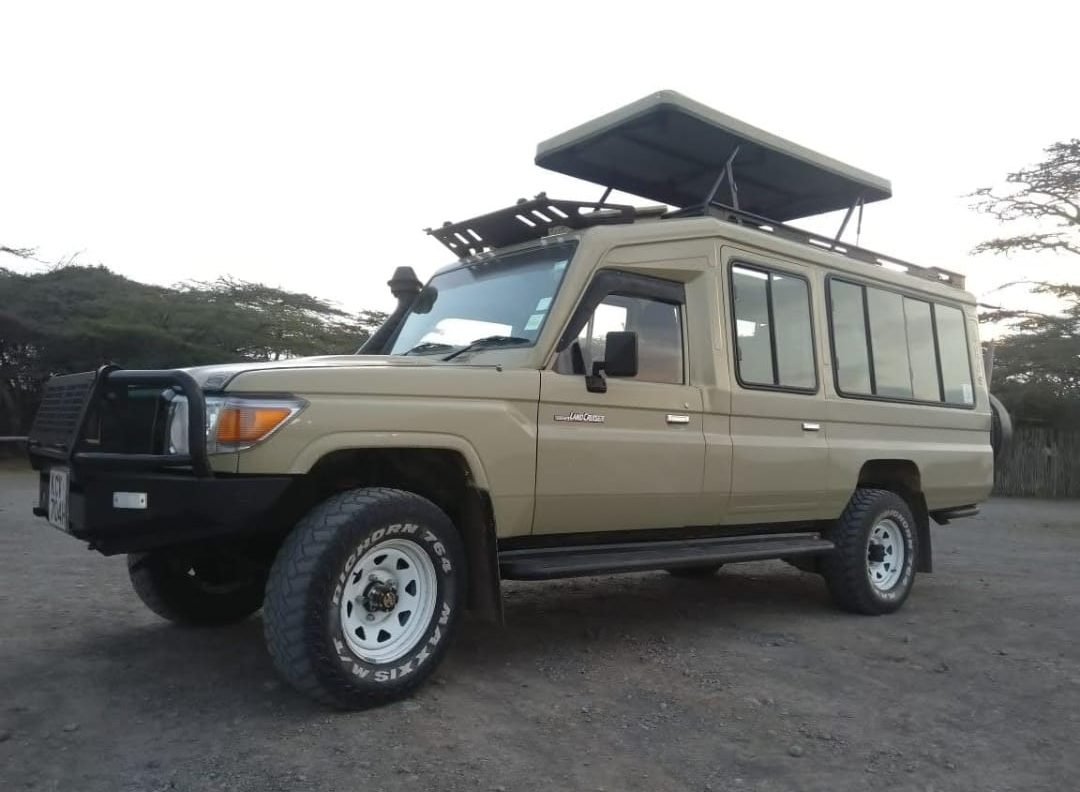
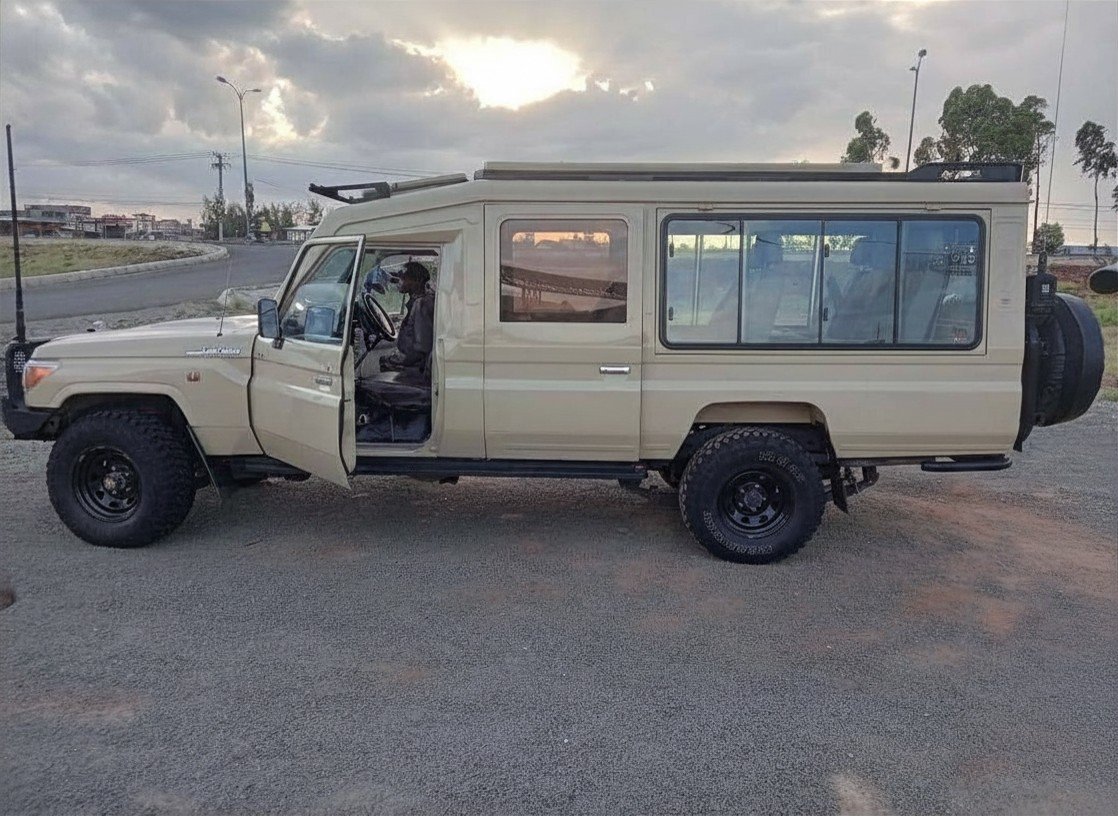
Every game drive on this Amboseli safari takes place in a custom-fitted Toyota Land Cruiser — private throughout, with a full pop-up roof for unobstructed wildlife viewing and photography. In Amboseli's open terrain the pop-up roof is essential — you're often close enough to elephant herds to photograph without a telephoto lens, and you want to be standing, not craning through a window.
Full Pop-Up Roof
The entire roof lifts open for unobstructed 360° wildlife viewing and photography. In Amboseli's open terrain this is essential — elephant encounters happen at close range and you want to be standing, not craning through a window.
Comfortable Captain Seats
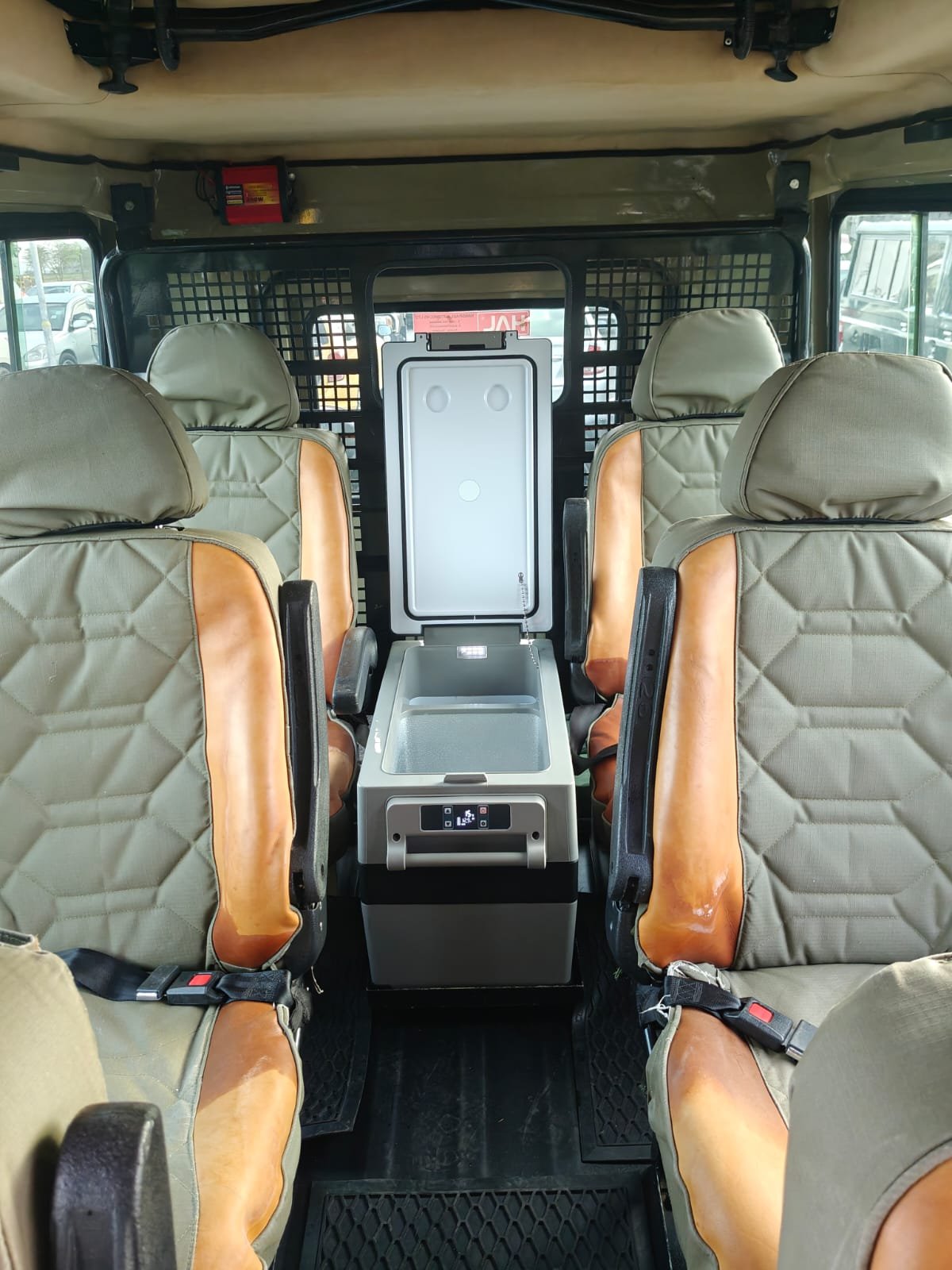
Firm, upright seating with individual armrests and built-in viewing height. Positioned for long game drives — you'll spend 4–5 hours in the vehicle each day and the seats are built for it.
USB & 12V Charging
Multiple USB-A, USB-C and 12V socket charging points throughout — keep cameras, phones, and spare batteries charged across every game drive.
Cool Box & Water Supply
Chilled drinking water available throughout every drive. The on-board cool box holds water and snacks — Amboseli's midday heat makes this non-negotiable.
First Aid Kit On Board
Every vehicle carries a comprehensive first aid kit and your guide holds a current first aid certificate. Emergency contacts are pre-saved and accessible throughout the safari.
100% Private — Always
This vehicle is never shared. No strangers, no compromises on timing, no waiting for others. You set the pace of every drive, every stop, and every return to camp.
Genuine 4×4 traction handles Amboseli's dusty tracks and marsh-edge terrain in all conditions. The Land Cruiser goes where the wildlife is — not just where the road permits.
The Land Cruiser seats up to 6 with full pop-roof access for all. For couples or small groups, you'll have considerable space — ideal for keeping camera equipment accessible.
Every vehicle undergoes a full mechanical inspection before departure. We carry a spare tyre, tow rope and repair kit as standard. In 15 years we have never abandoned a client on the road.
Pricing varies by travel dates and seasonal rates at Kibo Safari Camp. We'll prepare a no-obligation quote for your exact dates, group size, and any extensions or upgrades you'd like to discuss.
Prices per person sharing. Solo supplement available on request.
Yes. Three days gives you two morning drives (the best game-viewing time), a full afternoon, and a final morning before departure. Amboseli is a compact park and the wildlife — particularly the elephants — is reliably visible. You won't feel rushed.
Almost certainly. Amboseli has one of the highest densities of elephants in Kenya — the herds are large, habituated to vehicles, and present year-round. The Amboseli Marsh guarantees sightings; the elephants are drawn to it consistently.
Yes, on clear days — which are most common in the early morning before cloud builds, and sometimes at dusk. December to March typically offers the clearest views. The mountain is in Tanzania but dominates the southern skyline from inside the park.
Approximately 4 hours via the Emali route. The drive is straightforward and the landscape becomes increasingly dramatic as you approach the park. Your guide will manage timing to ensure you arrive for lunch.
Lion, cheetah, buffalo, zebra, wildebeest, giraffe, hyena and over 400 bird species including hammerkops, kingfishers, pelicans and over 40 raptor species. Note: Amboseli does not have rhino — if rhino is important to your safari, we recommend combining with Lake Nakuru.
Kibo is a comfortable mid-range camp with tented accommodation, full-board meals and a relaxed atmosphere well-suited to a focused wildlife safari. The name means Kilimanjaro — the mountain is its backdrop and the elephants are regular camp visitors.
Yes. Common extensions include adding Tsavo West (hippos at Mzima Springs, dramatic lava flows), Lake Nakuru for rhinos and flamingos, or a coastal beach extension in Diani. Use Get a Custom Safari Quote to discuss options.
Year-round — the elephants are always present. June to October and January to March offer the driest conditions and best Kilimanjaro views. April and May can bring short rains. December to February is calving season — newborn elephant calves with the mountain behind them.
Speak to our Nairobi team directly — we know Amboseli, we know Kibo, and we'll make sure you're there on a clear morning when the mountain is out.
3-Day Amboseli Elephant Country Safari