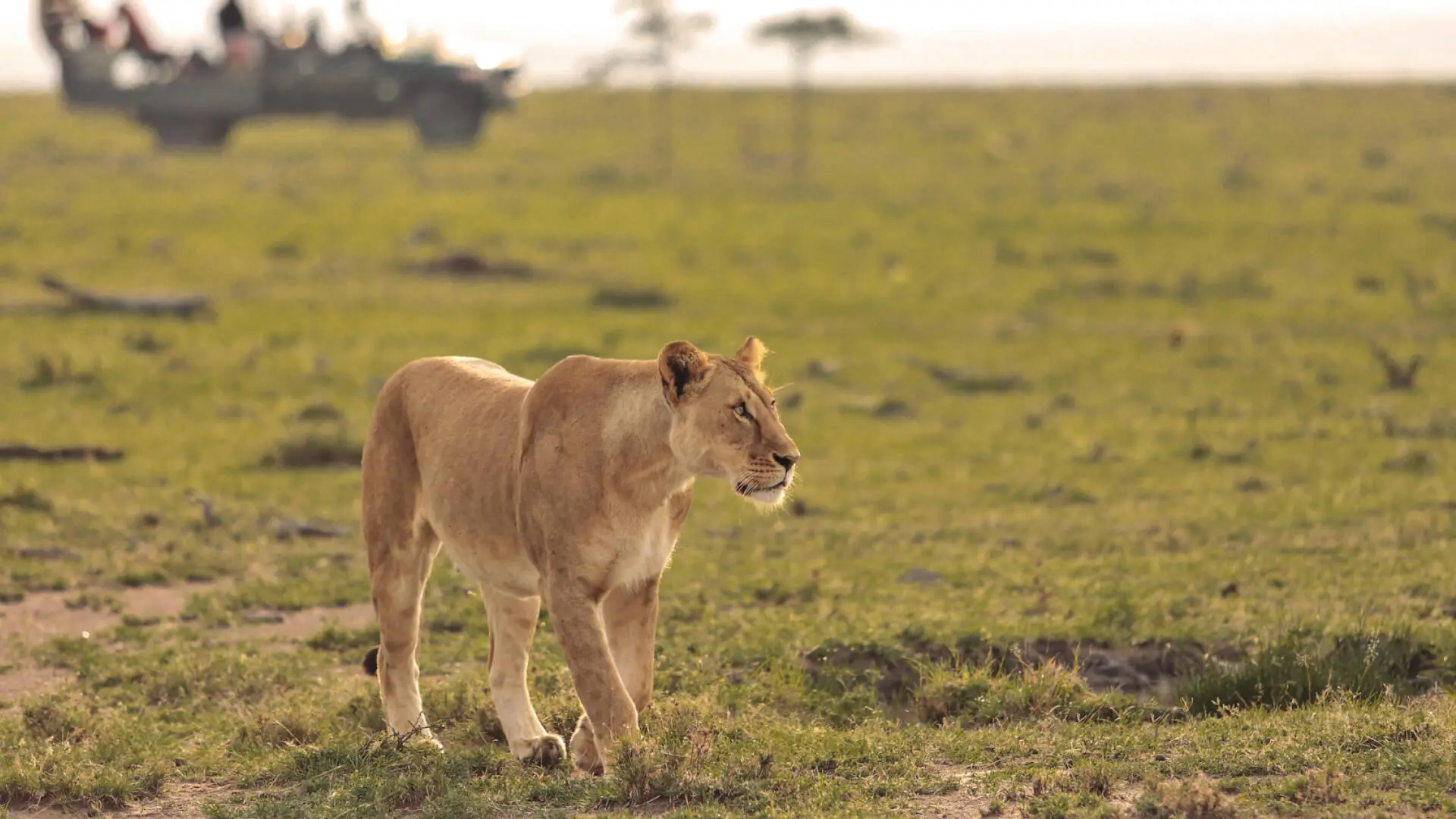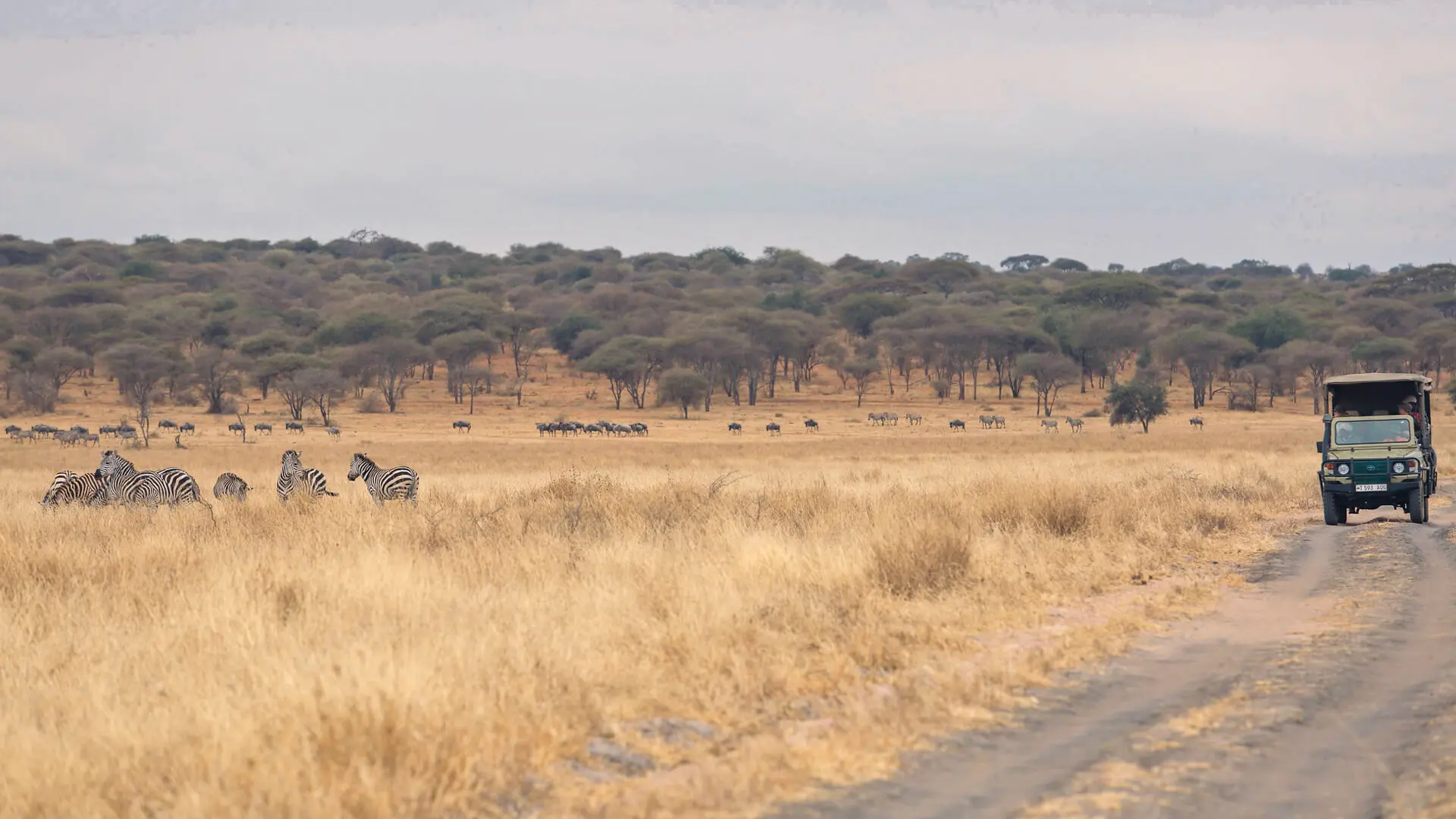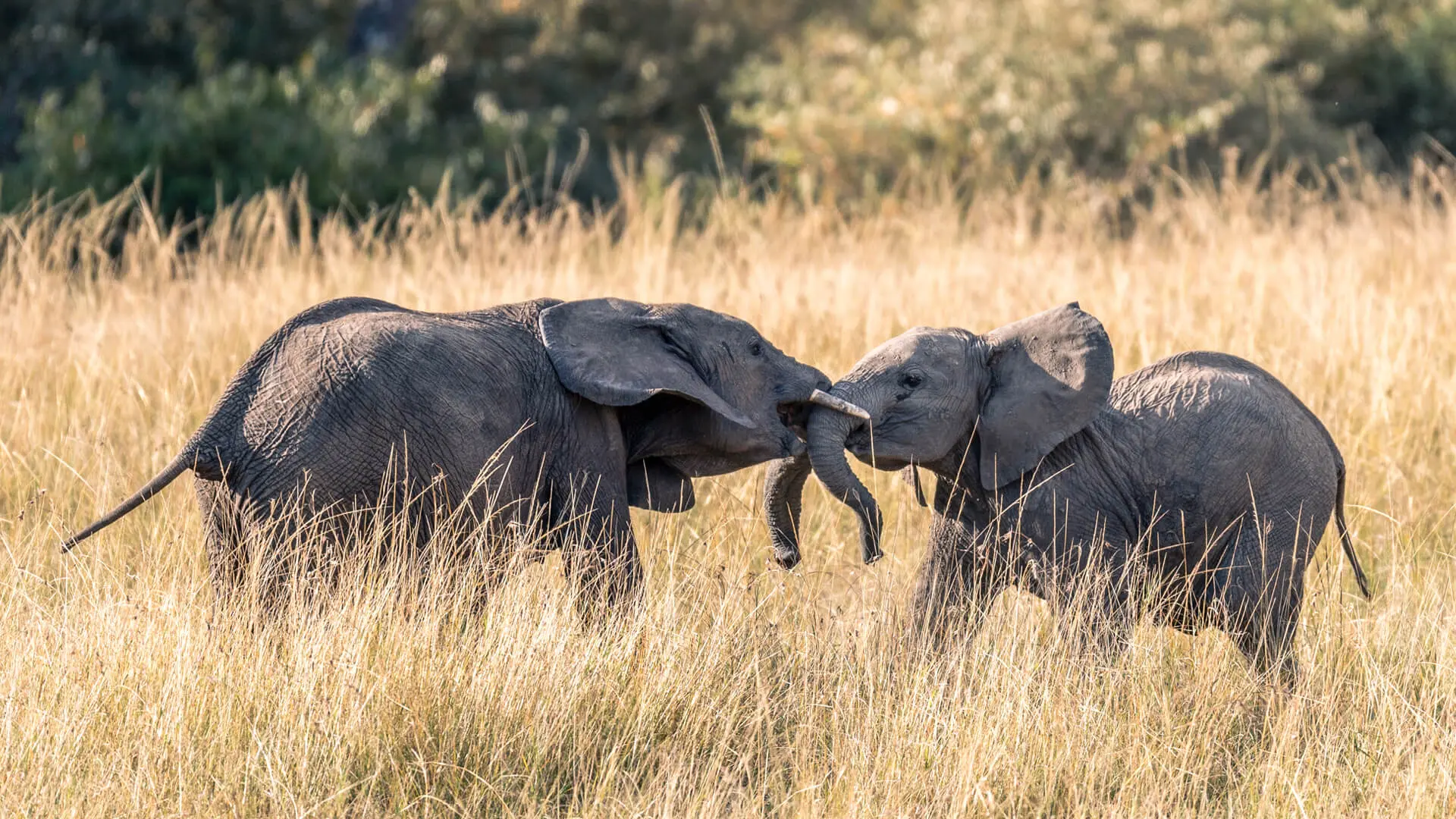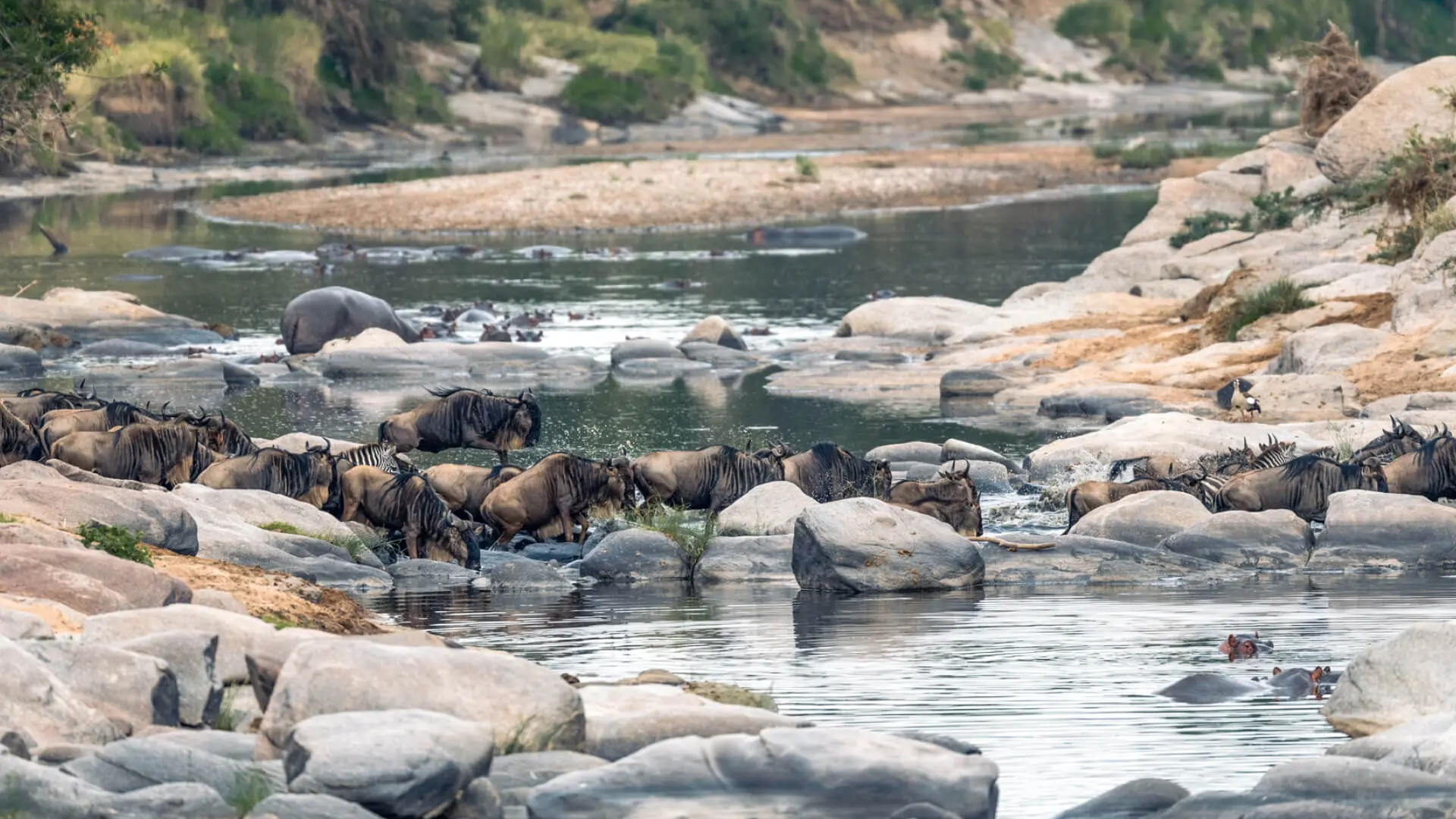
The world's most iconic wildlife reserve. Where lion prides roam open plains, the Great Migration crosses ancient rivers, and every sunrise carries the promise of something extraordinary.
Spread across 1,500 square kilometres of golden savannah, the Masai Mara is the northern reach of the vast Serengeti ecosystem — and arguably the finest big-cat country on earth.
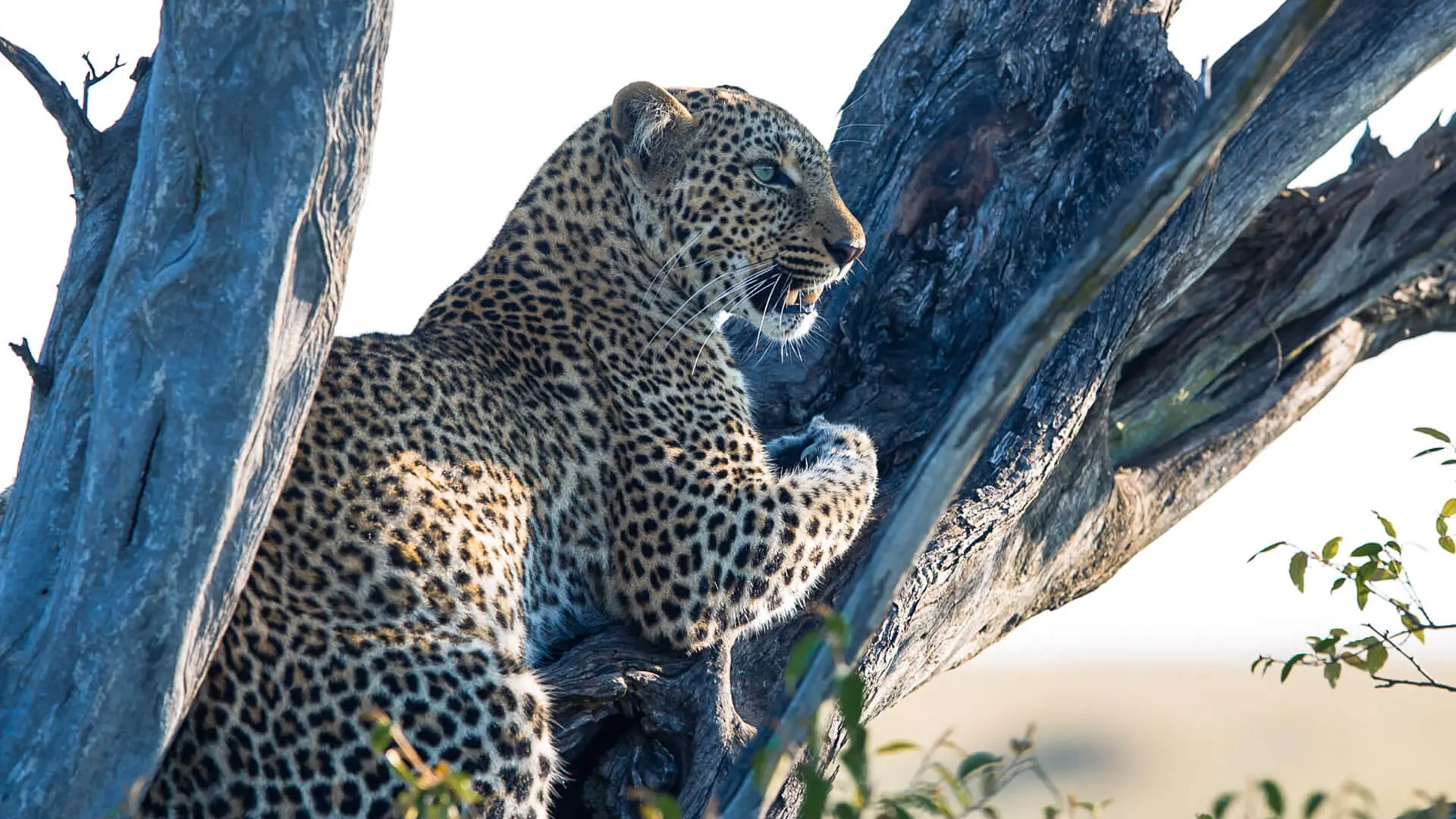
From July to October it becomes the stage for the Great Migration, when more than a million wildebeest brave the crocodile-filled Mara River. The rest of the year it rewards you with resident lion, leopard, cheetah and elephant, and far fewer vehicles to share them with.

From intimate fly-in camps to family-friendly lodges and once-in-a-lifetime honeymoon escapes — every Mara safari we plan is entirely private, crafted around you.

Nairobi to the Mara by road — six game drives across the best lion and cheetah country.

Timed for the river crossings, with extra days to maximise your chances of seeing the wildebeest brave the Mara.

Fly straight to the heart of the reserve — maximum time on the plains, minimum time in transit.

July to October, focused on the Mara River crossings — the most dramatic wildlife spectacle on earth.

Fly-in to a premier tented camp in a private conservancy — private vehicle, expert guide and spa.

Family-friendly lodges, junior ranger activities and a Maasai cultural visit — child rates apply.

Dawn hot-air balloon, champagne breakfast on the plains and a 5★ lodge — the Mara at its most romantic.

Naboisho Conservancy with night drives, bush meals and expert guides — away from the crowds.

Intimate camps, private bush dinners and star-bed nights — a honeymoon safari to remember.
A Masai Mara safari costs between $150 and $1,200+ per person per day, depending on your accommodation, travel season, and whether you fly in or drive — from shared tented camps to exclusive private conservancies with fly-in access.
Peak season (July–October) costs 20–40% more than green season (November–June).
The accommodation you choose is the single biggest factor in your overall cost.
Flying adds $250–$450 per person return but saves 5–6 hours of driving each way.
Private vehicles are cost-effective for groups of 4+. Smaller groups pay more per person.
A safari here is more than a vehicle and a sighting. Rise above the plains, walk them on foot, or simply watch the sun fall with a drink in hand.
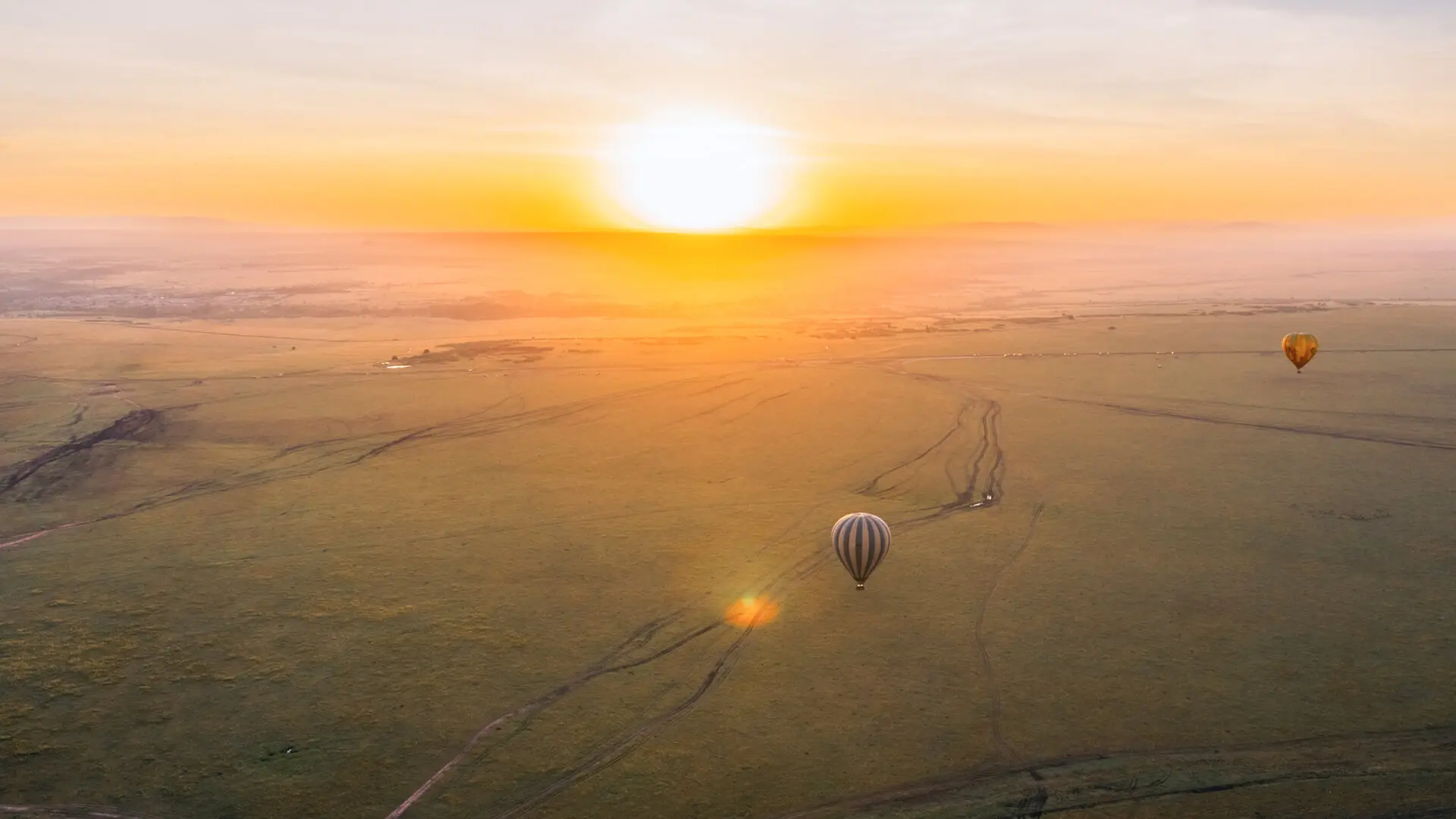
01 / 04Float silently above the savannah at first light as the herds wake below, then land to a champagne bush breakfast.
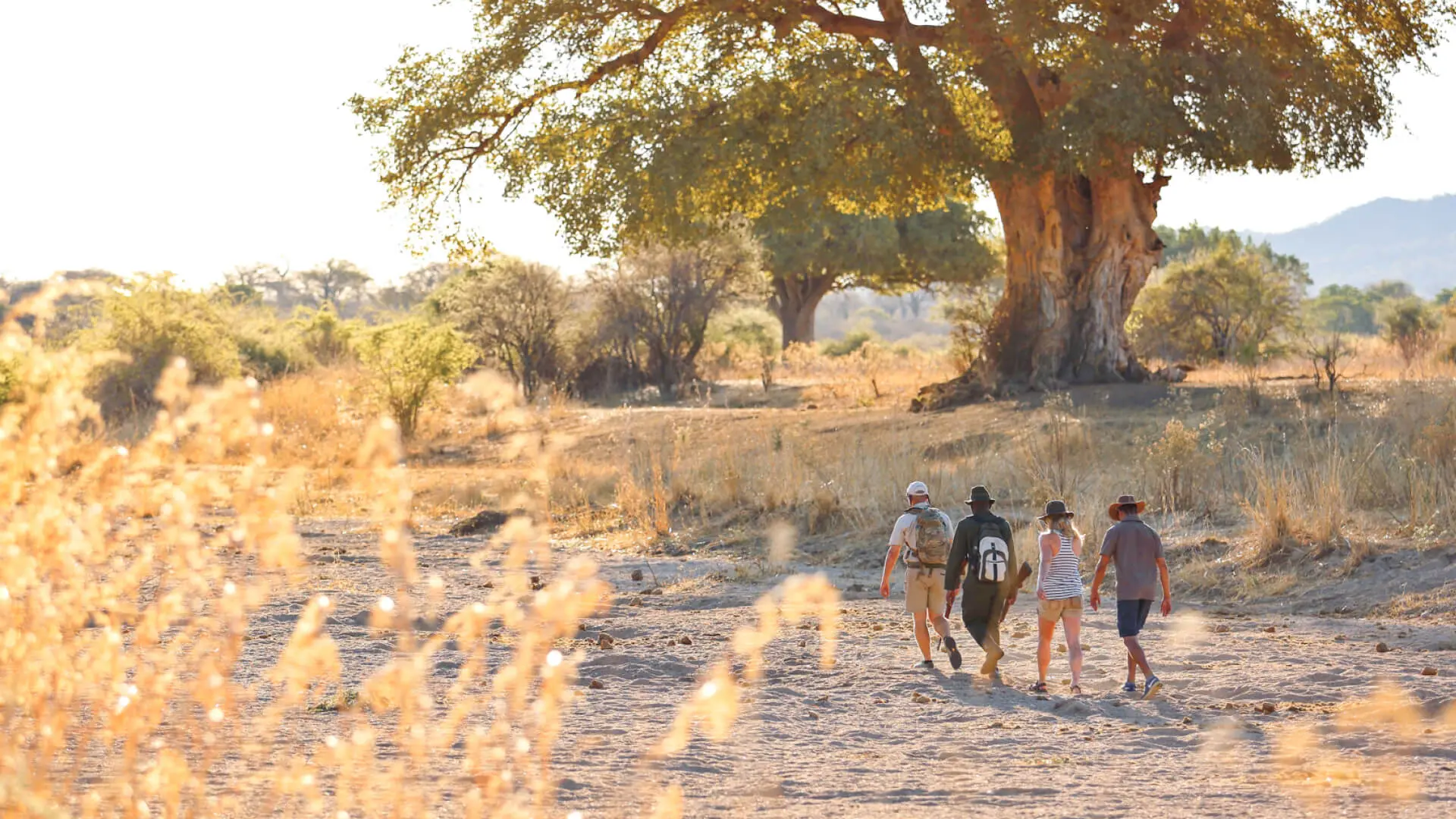
02 / 04Read the bush at ground level with an armed guide — tracks, birdsong and the small details a vehicle races past.
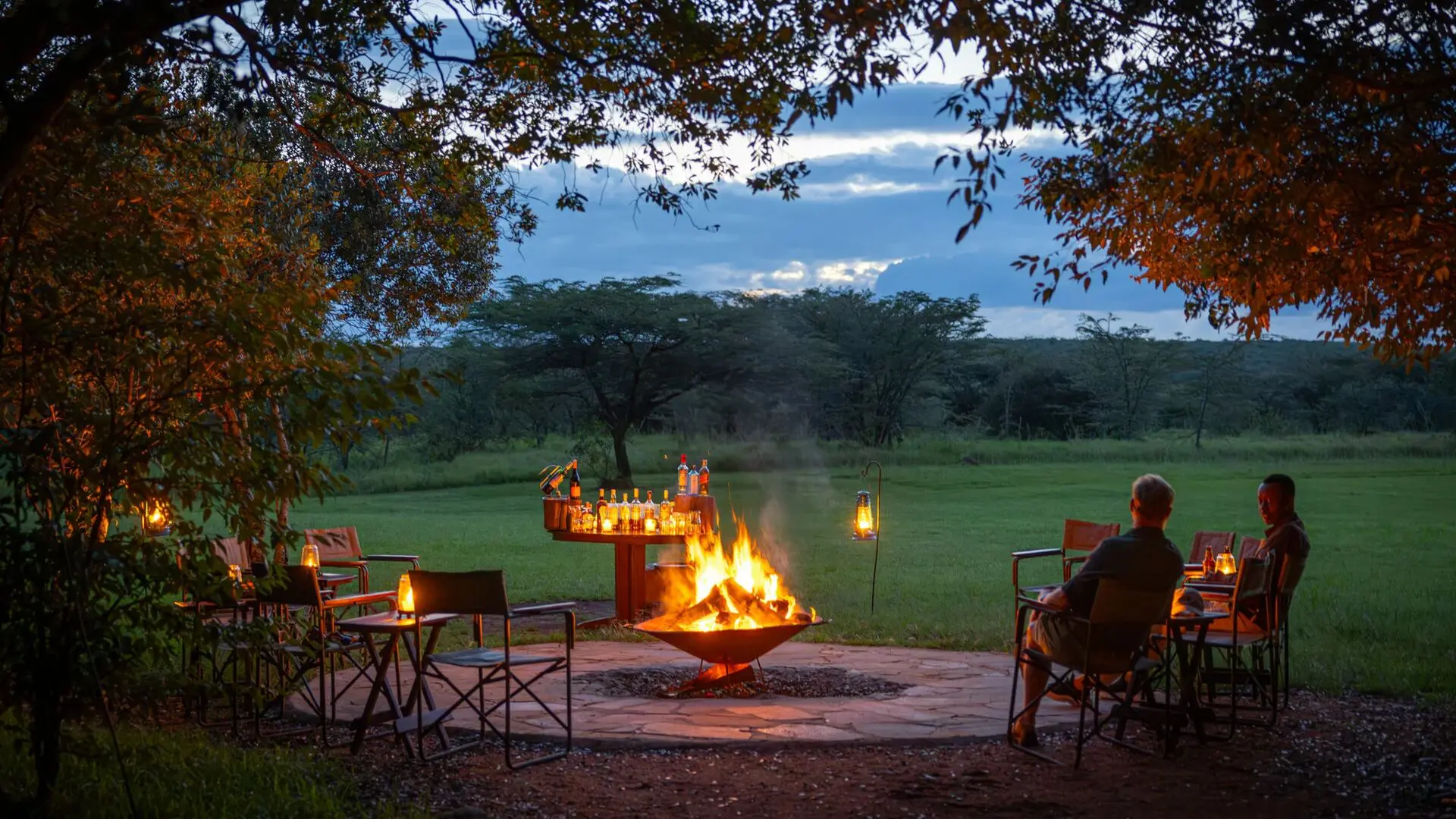
03 / 04Pause on a rise as the sky turns amber, drink in hand, and watch the Mara settle into dusk.
04 / 04Tables laid in the open under an acacia, breakfast served where the only other guests are passing wildlife.
The Masai Mara is exceptional year-round. Your ideal month depends on what you want most.
Warm, clear mornings and emerald grass. Predator action is superb as big cats hunt among the calving herds, and you will often have sightings entirely to yourself. Excellent value and the best light for photography.
The long rains bring dramatic skies and lush scenery. Wildlife remains resident and rewarding, camps are peaceful, and prices are at their lowest — ideal if you value space and quiet over the migration crowds.
The headline event. More than a million wildebeest pour across the crocodile-filled Mara River in heart-stopping crossings. The single most dramatic wildlife spectacle on earth — book well ahead, as camps fill fast.
Brief afternoon showers green the plains again and migratory birds arrive in force. Resident predators are active, the landscape is at its most photogenic, and the festive period offers a wonderful time to travel.
Most visitors fly into Nairobi’s Jomo Kenyatta International Airport, then connect via a 45-minute domestic flight from Wilson Airport to one of five Mara airstrips.


The "Masai Mara" is not one place but a mosaic — the national reserve at its heart, ringed by private conservancies. Choosing the right area is one of the most important decisions you will make.

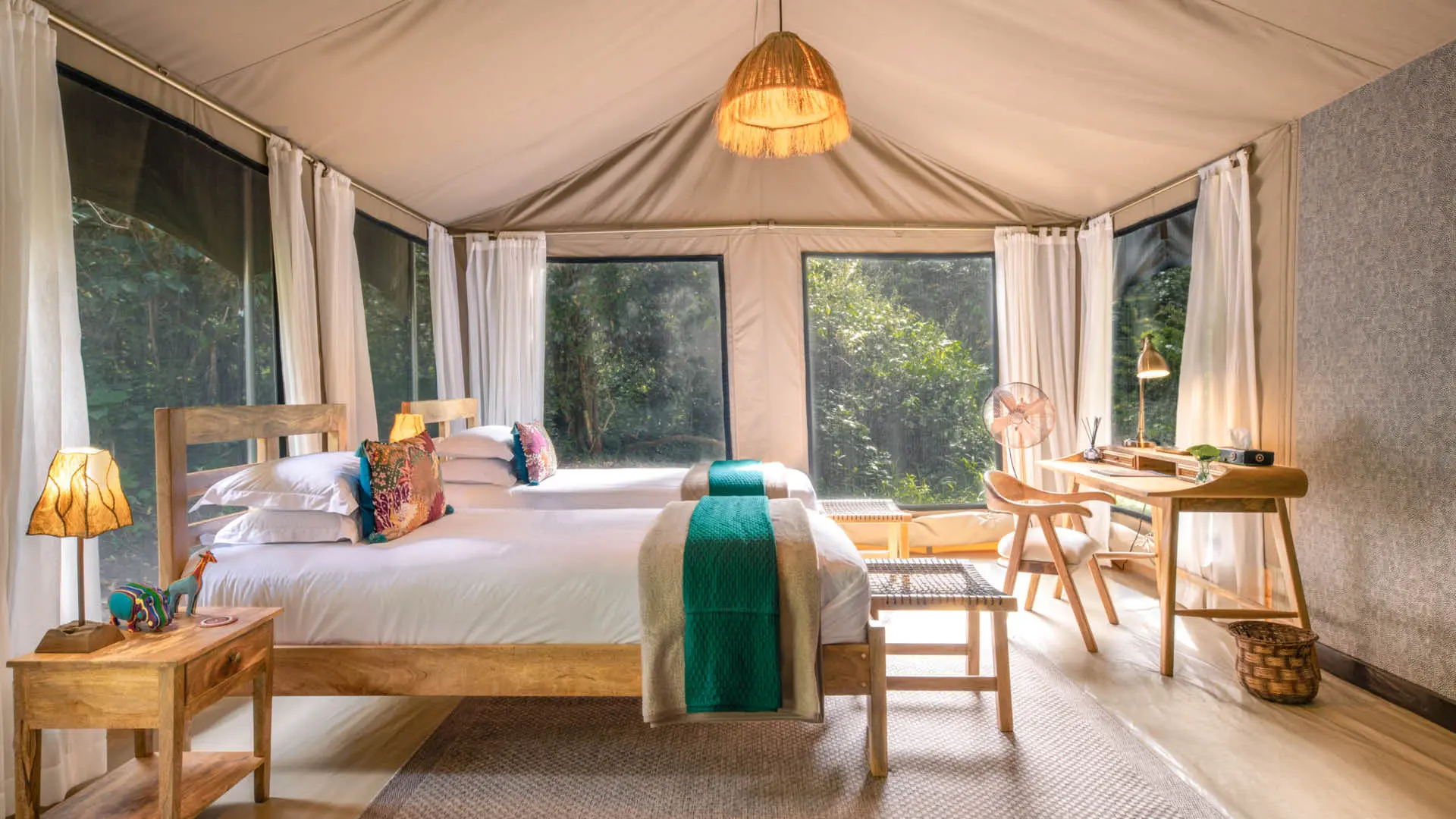
From honest, well-run tented camps to intimate luxury under canvas, we match you to a camp that fits your style and budget — always chosen for location, guiding and genuine character.
Our most comprehensive guides — created by our guides and specialists from decades of Masai Mara experience.
Month-by-month breakdown of the migration route, crossing locations, best viewing positions, and how to time your visit for river crossings.
Read the guideDetailed comparison of all five conservancies — which to choose based on your budget, travel style, and wildlife priorities.
Explore conservanciesExactly what to bring, what to leave behind, and what you’ll wish you had — from clothing colours to camera gear and medical essentials.
View packing guideTransparent breakdown of what drives safari pricing — accommodation tiers, seasons, conservancy fees, and how to get the best value.
Compare costsChild-friendly lodges, age-appropriate activities, practical tips for travelling with children, and suggested family itineraries.
Family packagesThe most romantic camps, special experiences from star-bed nights to private bush dinners, and how to make your honeymoon safari unforgettable.
Honeymoon packagesA minimum of 3 nights (4 days) is recommended for a meaningful Masai Mara safari. This gives you 6 game drives and enough time to see the reserve's key areas. If you're combining the Mara with other destinations such as Amboseli or Nakuru, 2 nights is workable. For the Great Migration, 4-5 nights is strongly recommended to maximise your chances of witnessing a river crossing.
Absolutely. The Masai Mara is one of the most accessible, rewarding, and consistently excellent wildlife destinations on earth. It is ideal for first-timers because wildlife density is exceptional, infrastructure is strong, and the reserve's open plains make game-viewing relatively straightforward. Every first-time safari we book is memorable.
A private safari means you have your own vehicle and guide for your exclusive use. You set the pace, decide where to go, and stay as long as you wish at any sighting. Shared safaris involve joining other travellers in a shared vehicle. We specialise exclusively in private safaris from Nairobi, which offer an incomparably better experience than any shared or group departure.
Most nationalities require a Kenya eTA (Electronic Travel Authorisation), which replaced the old visa system in 2024. The eTA costs $30 for most nationalities and is applied for online at etakenya.go.ke before travel. Processing takes 1-3 business days. We will guide you through this process as part of your booking.
There are two options. The road transfer takes approximately 5-6 hours from Nairobi via the scenic B3 highway and is included in most of our packages. Alternatively, a 45-minute light aircraft flight from Wilson Airport delivers you directly to the Mara airstrip. Both are excellent — the choice depends on your budget and schedule.
For travel during July-October (Great Migration peak season), we strongly recommend booking 9-12 months ahead. Top lodges and conservancy camps sell out for August and September over a year in advance. For travel outside peak season, 3-6 months is usually sufficient, though earlier is always better for preferred lodge options.
No responsible operator guarantees wildlife sightings. However, the Masai Mara is genuinely one of the highest-probability destinations on earth for Big Five sightings. Lion, elephant, buffalo, and leopard are resident and frequently seen. Black rhino is rarer but present. Over 3-4 days with an experienced guide, seeing four of the Big Five is very realistic; all five is possible.
Early mornings (departing before 7am) and late afternoons (4-7pm) are consistently the best times. Animals are most active in cooler temperatures. Midday is the least productive period, which is why our itineraries always include an afternoon rest back at camp. The golden hour light at dawn and dusk also makes for the most spectacular photography.
Yes. The Masai Mara and particularly the Mara Triangle and open plains are home to some of Africa's most habituated cheetah. Several well-known cheetah coalitions and mothers with cubs are regularly tracked by our guides. Cheetah sighting probability in the Mara is among the highest of any safari destination in Africa.
Night drives are not permitted within the Masai Mara National Reserve itself. However, they are fully permitted within private conservancies such as Mara North, Naboisho, and Olare Motorogi. If night drives are important to you, we will book accommodation within a conservancy that allows them.
River crossings typically occur between July and October, with August and September being the peak months. However, crossing timing is entirely dependent on the wildebeest. No one can predict crossings with certainty more than a day or two ahead. Our guides position clients near established crossing points and remain in constant communication with other guides across the reserve.
Approximately 1.5 million wildebeest, 200,000 zebra, and 500,000 Thomson's gazelle participate in the annual migration. When they are all in the Mara simultaneously, the landscape can appear endless with horizon-to-horizon herds. It is genuinely one of the most overwhelming wildlife spectacles on earth.
Emphatically yes. Even without a dramatic river crossing, the sheer scale of the migration is extraordinary. The concentrations of predators that follow the herds, the sounds, the dust, and the constant movement make it one of Africa's most powerful safari experiences. A crossing is the highlight; the rest of the migration is still exceptional.
A 3-day private Masai Mara safari from Nairobi starts from approximately $950 per person for mid-range accommodation, including all meals, park fees, private guide, and vehicle. Luxury packages start from $2,500-$4,000 per person. Fly-in luxury safaris can reach $6,000-$10,000+ per person.
All our packages include accommodation, all meals (full board), game drives with a private professional guide, Masai Mara National Reserve entry fees, and Nairobi pickup and drop-off. Not typically included: international flights, Kenya eTA, travel insurance, tips and gratuities, and optional activities such as hot air balloon flights.
Tipping is customary and greatly appreciated, but never obligatory. General guidance: $15-25 per day for your guide, and $5-10 per day for lodge staff. We will provide a detailed tipping guide as part of your pre-departure briefing.
We use custom-fitted 4x4 Toyota Land Cruisers and Safari Land Rovers with pop-up roofs for open-air game viewing. Each vehicle seats 6-7 passengers comfortably but is provided privately — just your group and your guide. Vehicles are equipped with charging points, a cool box with water and snacks, and first aid kits.
Yes. The main road transfer via Narok is well-travelled and our drivers are experienced professionals. The final section into the reserve is on unpaved tracks, completely manageable in our 4x4 vehicles. The journey takes 5-6 hours and includes a comfort stop.
Yes. The Masai Mara is in a malaria zone. We strongly recommend consulting your doctor or travel health clinic before departure for appropriate antimalarial medication. DEET-based insect repellent, long-sleeved clothing at dawn and dusk, and mosquito nets (provided in all camps) are additional precautions.
Kenya's safari circuits, including the Masai Mara, are considered very safe for tourists. The Masai Mara specifically has excellent infrastructure, experienced staff, and a well-established tourism environment. Our guides are first-aid trained and in constant communication. Comprehensive travel insurance, including medical repatriation, is essential.
Travel insurance is non-negotiable for a Kenya safari. Your policy must include emergency medical treatment, medical repatriation, trip cancellation, and ideally AMREF Flying Doctors emergency air evacuation coverage. Medical facilities in the Mara area are limited, and an emergency air evacuation to Nairobi without insurance can cost $15,000-$25,000.
A telephoto lens of at least 300mm (400-600mm for serious wildlife photography) is ideal. A second camera body with a wider lens allows you to capture landscapes and camp life. Bring a beanbag for vehicle-mounted stability and extra memory cards and batteries — charging may be limited at some camps.
Olare Motorogi Conservancy is considered the premier photography destination within the Mara ecosystem. The Olare pride of lions is one of the most habituated and photographed lion families in Africa, and the limited number of vehicles means you rarely share a sighting. Mara North is also exceptional for photography, particularly for night drive opportunities.
The golden hours at dawn and dusk offer the best light for wildlife photography. The Mara River crossing during migration season (July–October) provides some of the most dramatic wildlife photography anywhere in Africa. Early morning game drives regularly produce predator action as lions and cheetahs are most active at dawn.
Always ask permission first and offer a small fee — typically $2–5 per person photographed. Most Maasai communities welcome respectful photography. During a cultural village visit this is typically included and arranged by your guide.
Golden hour — the first hour after sunrise and the last hour before sunset — gives the warmest, most flattering light. Midday light is harsh but good for overhead shots of birds and balloon photography. The Mara River is best photographed in the morning when the light hits the water from the east.
Several Mara camps offer dedicated photography vehicles with custom seats and bean bags. Governors Camp, Mara Bushtops and Saruni Mara all offer photography-focused drives on request. Ask Safari Travel Plus to match you with a photography-specialist guide when booking.
There are two options — road transfer or scheduled flight. The road journey takes 5–6 hours depending on traffic leaving Nairobi. Scheduled flights depart from Wilson Airport in Nairobi and land at one of five Mara airstrips in approximately 45 minutes. Safari Travel Plus arranges both options and can advise on what suits your itinerary.
The main airstrips are Keekorok, Ol Kiombo, Musiara, Serena and Ngerende. Which airstrip you use depends on which area of the Mara your lodge is located. Your transfer will be arranged by your lodge from the correct airstrip.
Approximately 40–50 minutes from Wilson Airport, Nairobi. Flights operate multiple times daily with Air Kenya, SafariLink and Fly540. Schedules vary by season — Safari Travel Plus will confirm your specific departure times when booking.
Yes — the Nairobi to Mara road via Narok is well-travelled and safe for tourists. The journey is long but passes through scenic Rift Valley landscapes. Safari Travel Plus uses experienced drivers with well-maintained 4WD vehicles. We advise departing Nairobi early morning to avoid city traffic and arrive before dark.
Flying costs approximately $250–$450 per person return and saves 5–6 hours of road travel each way. Driving allows you to see the Rift Valley and stops along the way, and is significantly cheaper — especially for groups of 4 or more. For a 3-day Mara trip we recommend flying. For longer itineraries the road journey is a worthwhile experience.

Tell us your dates and what you dream of seeing. We will design a private Masai Mara safari around you and reply within 24 hours.