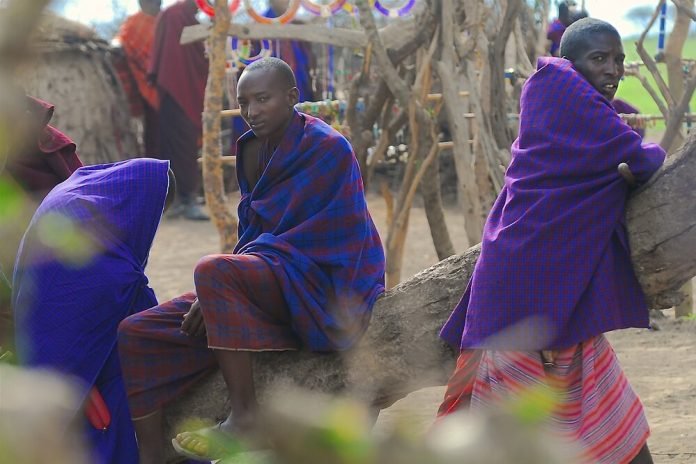
With their history dating as far back as the 15th century, the Maasai tribe is one of the oldest inhabitants of East Africa and still retain many of their traditions as they live relatively uninfluenced by modern day civilization.
Maasai Village Tours
A highlight of any Kenya safari tour is a Maasai village tour also known as a Maasai Boma to get a glimpse into their unique way of life as it promises to be an educational experience – in one way or another.
As you arrive at the village, excited children and adults welcome you with song and dance, At certain times, one of the dancers will jump up and down gracefully.
The Maasai People are known for not using musical instruments while singing and dancing. However, the beads they wear make some sound as the Maasai Jump making it a fascinating experience to watch while on your Maasai village tour.
Manyatta
The Maasai live in structures known as Manyattas which are low height dwellings, essentially huts, made of mud, cow dung and wood, with a single entrance and minimal side windows. Clusters of these manyatta huts, which form a homestead or village, are known as a Maasai Boma.
These individual huts themselves, the manyattas, have windows so small that it can be very dark inside a manyatta even on a sunny day.
Pastoralist
The maasai are pastoralists who are constantly in search for better pasture for their animals these bomas historically were never permanent. They would live in a village for less than a year and then move on in search of better pastures.
Times have changed and they have begun to built permanent huts or bomas and prefer to stay in once place. They are pastoralists and cattle is still essential to their way of life.
The women build these bomas not the men.
On your tour you will interact with the masai with a couple of activities to engage in including a mock wedding dance, masai warrior (moran) jumping dance and engage in some beadwork with the women.
You will also practice some traditional archery and spear throwing, learn the art of making a fire in the bush among many others things to see and do.
Find yourself in the midst of the daily hustle and bustle of local life as you witness the daily rituals of the Maasai. Once you have drunk your fill of this authentic cultural experience, you can choose to explore the Maasai Craft Centre and purchase artefacts made by the people you encountered.
We would recommend seeing this experience as educational, keeping in mind what to expect. Take as much out of your visit to a Maasai village as possible as there is much to learn from different cultures.
Here are 27 things to do while you are in Nairobi.
The Giraffe Manor
The Giraffe Manor is an animal-centric building in Nairobi, Kenya that welcomes visitors especially animal lovers. The building itself is an extension of the facility where visitors can sleep in a luxury suit for the night and watch as the giraffes come to share breakfast with them. Giraffe Manor hotel allows giraffes to wander freely around its premises.
Kenyatta Market
The Kenyatta market is found in Ngumo. The market is a favorite shopping Centre for all classes of people in Nairobi.
Kenyatta market offers an opportunity to people to make money by selling second hand clothes to both locals and visitors. This place is often visited by foreigners to buy cheap African items. This is an opportunity where people can buy good quality items for relatively low prices.
Kenyatta International Conference Centre (KICC)
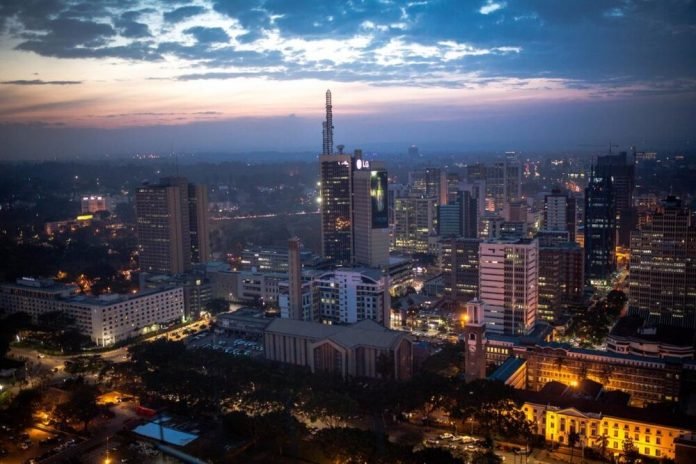
If you are looking for great sweeping views of the city and are a lover of skyscrapers, the KICC once the tallest in East Africa, should be on your bucket list.
On most days, for a few shillings the security guard will escort you in an elevator to the top floor where you’ll be treated to amazing city views
Nairobi National Museum
There isn’t a better place to explore the history of Kenya than the Nairobi National Museum. Located about one mile from the city’s center, this museum allows you to explore the history and culture of the country.
Snake Park
The Nairobi snake park needs no introduction. The Snake Park showcases snake species from Kenya and around the world. The park is a thriving showcase of honest reptiles that are also educational, hosting talks on subjects as varied as snake anatomy, reptile reproductions, and even the green-waste composting that happens in the park.
The Karen Blixen Museum
The Karen Blixen Museum is the best place to learn about the history of colonial Kenya. This Museum, the home of Danish author Karen Blixen, has a collection of images, documents, and several colonial period items.
The museum was the backdrop for her novel “Out of Africa.”
The East Africa Railway Museum
The East Africa Railway Museum is an old railway line from the Nairobi Railway to its terminus at Kisumu and the Nyeri Railway that passes through the center of Nairobi. The museum hosts steam locomotives, carriages and railcars.
National Archives
Far more than just a home to archives and public records, the National Archives in Nairobi also exhibit everything from traditional art to stamps, weapons, and photography. Visitors can explore the small on-site museum, spend a quiet hour paging through a newspaper, or check out the archives’ collection of rare books from across Africa.
The Memorial Park
The Memorial Park comprises a tranquil landscaped garden, a wall commemorating the names of those who died in the US embassy bombing of August 7th 1998. There is a sculpture made from the debris of the blast. The park also features a Conference Center and a Visitors Center with a Memorial Museum displaying various images and exhibits, plus a documentary about the events surrounding the tragedy.
Giraffe Centre
A breeding, research, and conservation center where you can learn about Rothschild giraffes and get the opportunity to feed giraffes. The Giraffe Centre is the first step in improving welfare for Rothschilds. Feeding giraffes is a peaceful activity that is ideal for people of all ages. It helps reduce stress, improves well-being, and is good for your physical and mental health.
Nairobi National Park
Nairobi is the only major city in the world where you can see lions, giraffes, and rhinos in the wild. Not far from city center, the Nairobi National park the oldest park in Kenya is home to a diverse number of animals, including black rhinos, lions, cheetahs, giraffes, baboons, zebras, eland, hippos, buffalo, wildebeest, waterbuck, leopards, and hundreds of bird species.
Dalphine Sheldrick
You can also arrange visits to the David Sheldrick Elephant Orphanage, which are both located on the edges of Nairobi National Park.
Sheldrick was a very influential anti-poaching activist and his wife has carried on the legacy. At dalphine sheldrick Elephant Orphanage there are orphaned elephants that are being raised, trained and protected by the Sheldricks.
It’s a great experience and of course you can take a close up photos and feed the elephants.
The Animal Orphanage
The Animal orphange is the perfect place for animal lovers in Kenya.
The Nairobi Animal Orphanage was established in 1964, as a refuge for wild animals that were abandoned, orphaned or injured,
The shelter is home to one of it most famous resident a male leopard who was rescued after being abandoned by it mother in 2006 when it fell into a deep hole at the masai mara.
There are also Lions, hyena, buffalo and warthog.
Karura Forest
There is nothing like the satisfying feeling of adventure when you visit the Karura Forest. A Karura Forest tour is an excellent way to escape the fast-paced side of the Nairobi city.
Its also a lovely little surprise in the middle of the city. With over 50 kilometers of walking, biking, and nature trails, this is one of the best places to visit for a taste of nature while still staying in the city.
The Nairobi Arboretum
This national forest reserve covers an area of about 30 hectares. It consists of mostly forest and woodland which are home to about 300 species of birds, primates (vervet and Sykes monkeys).
Ngong Hills
If you are looking for an outdoor adventure, then you can think of the Ngong Hills. It’s one of the most under-traveled natural places. Although just on the outskirts of Nairobi it still should be on your bucket list of things to do.
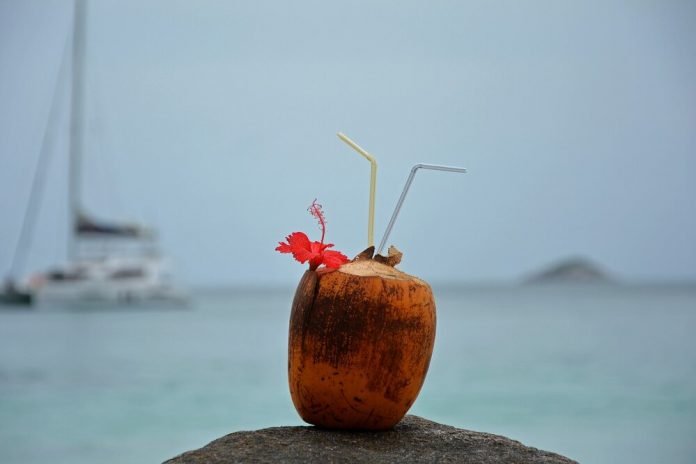
The question most travellers have is where to stay in seychelles.
The seychelles Islands An Indian Ocean paradise famed for its white-sand beaches and luxurious private island resorts, the Seychelles is a striking 115-island archipelago with leafy jungles, delectable Creole cuisine and a fascinating history of diverse African, Asian and European influences.
There’s plenty to see and do on a Seychelles Island Vacation for the adventurous travellers, from hiking the mountains and wandering the roads to sampling Creole cuisine and exploring beneath the waves.
Also, Seychelles is pretty safe to visit and explore.
Where To Stay In Seychelles
Accommodation options are wide-ranging, and there are some lovely small hotels – as well as seriously impressive island resorts, with everything from heli-pads to villa plunge pools to private chefs.
You can find large resorts on the three main islands: Mahé, Praslin and La Digue, as well as private islands such as Denis Island.
Some prominent examples of large hotels or resorts include the Kempinski Resort or the Hilton Northolme Resort & Spa on Mahé, the Constance Lémuria on Praslin, or Le Domaine de l’Orangeraie on La Digue.
Beau Vallon is also where you’ll find the best options for budget accommodations in Seychelles. Tucked amongst the five-star resorts you’ll find a variety of affordable options, including guesthouses, charming apartments, and boutique hotels.
Mahe
Should you decide to stay in Mahe, there is a regular ferry service to Praslin and La Digue, so you can still do a bit of island-hopping with day trips to these nearby islands. If you really want to splurge, helicopter and sailing charters are also available to whisk you off to whichever island you desire.
There are countless luxurious hotels and resorts scattered throughout the island so you should fine your self spoilt for choice. While you are here, you can enjoy a variety of excursions, from snorkeling and diving to hikes and canoeing.
Places To Stay In Mahe:
Banyan Tree – Situated on photogenic Anse Intendence beach at southern end of Mahé, the Banyan Tree is highly private, making it attractive to those looking for luxury beach vacations.
The Bliss Seychelles – Hotel Situated on its own private beach in the northern part of beautiful Mahe Island, overlooking North and Silhouette Islands.
Constance Ephelia Resort Hotel – Situated on one of Mahe’s most beautiful beaches and overlooks a marine national park. Tucked away on 120 hectares of land and amidst rare and lush vegetation.
Praslin
Praslin is the place to stay in Seychelles for Nightlife. Praslin is the second largest island of the Seychelles, and only 1/10 of the population of Mahe.
Depending on what you are after, you have two choices. You can stay on the West side of Praslin if you prefer seclusion and quiet, or you can locate yourself on the East if you want more restaurants and bars.
The West side of Praslin is a perfect paradise for honeymooners.
On the other hand, Praslin is considered by some to be Seychelle’s top nightlife destinations. Although the nightlife here is decidedly tamer than other party destinations worldwide.
Places To Stay In Praslin:
Acajou Beach Resort – Located along a stretch of the beautiful Cote D’Or beach of Praslin Island.
Coco de Mer Hotel and Black Parrot Suites – On a private beach area in Anse Bois de Rose, the Coco de Mer Hotel and Black Parrot Suites features a swimming pool, two restaurants and spa.
Les Villas D’Or – Les Villas D’Or is conveniently situated near the beautiful Côte D’Or beach, on Praslin Island. These self-catering villas are close to the Vallée de Mai Nature Reserve, home to the grand Coco de Mer palms.
La Digue
La Digue is the third largest of Seychelles inhabited islands. With a population of less than 3000. If you want to get away from everything and just enjoy luxurious beaches, La Digue is a great choice for you. It is located east of Praslin and can be easily accessed via the Inter Island Ferry.
There is no airport, and very few vehicles, so most visitors arrive to La Digue via ferry from Praslin. Helicopter service from Mahe can also be arranged.
La Digue has some of the most beautiful beaches in the world, including Anse Source D’Argent and Anse Cocos.
Often ignored by travellers, La Digue is where you can enjoy all the perks of paradise without the hoards of tourists.
Places To Stay In La Digue:
La Digue Island Lodge – For travelers visiting La Digue Island, La Digue Island Lodge is an excellent choice for rest and rejuvenation. Well-known for its romantic environment.
Le Nautique Waterfront Hotel – A beautiful, contemporary oceanfront hotel on the island of La Digue. There’s a choice of blue-and-white rooms or villas, a great seafood restaurant and a pool just steps from the ocean.
Beach Life – Located on the waterfront on the beautiful island La Digue, this hotel is ideal for a relaxing beach break.
This oceanfront hotel – This hotel has good guestrooms with nautical details and a private verandah; book a private villa for a family stay.
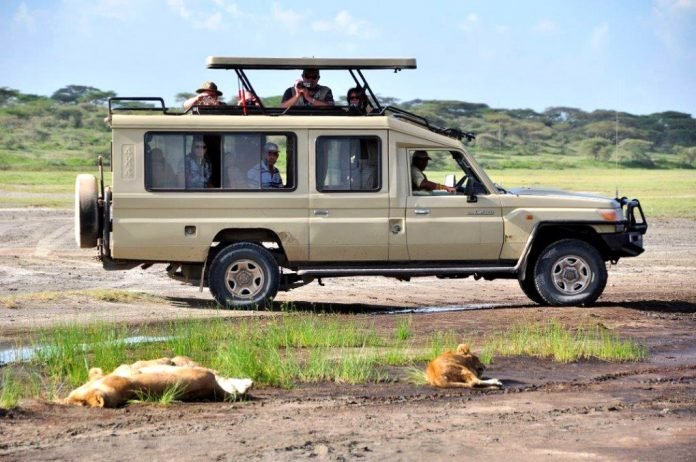
The Kenya Safari industry has two vehicle types that tour operators use for transport around the country on road safaris or between safari camps and lodges. They are the safari mini van and the toyota land cruiser.
Both these vehicles are 4×4 specially adapted for safaris with a pop up roof.
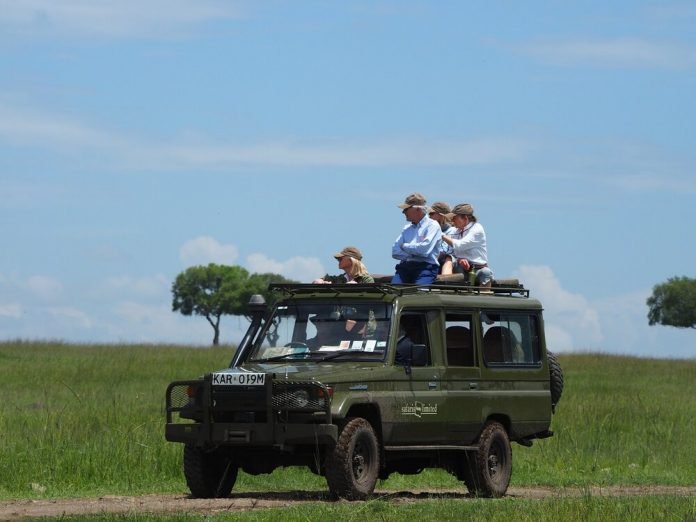
A Land cruiser safari is based on specially modified 6 seater Toyota Land Cruisers with custom shock absorbers and a pop-up roof that guests can use for wildlife viewing or photography. The Toyota Land Cruisers (4×4) are the standard vehicles used in Tanzania, Uganda, Kenya and even Rwanda for safaris.
The modified 4×4 Toyota Land Cruisers that we use for our safaris are great for African safaris and African roads.
They also provide the best experiences while on safari holidays with us. Our Toyota Land Cruiser Safari Jeeps are well designed keeping in mind legroom, space, and window seats.
One of the reasons we opt to use them is Toyota’s reliability. Unlike the higher-end Cruisers the Toyota Prados and Land crusiers Vx, this Cruiser is built on the Toyota Land Cruiser 79 Series chassis and holds incredible 4×4 capabilities.
Game Drives
Our safari vehicles are also fitted with a UHF radio call, an important feature that allows a driver to communicate with other drivers during the game drive. This is especially useful when tracking game and elusive preditors like leopards.
Private game drives on 4×4 land cruiser jeeps on Kenya, Tanzania Safaris and even Uganda Safaris are a very different driving experience. A small party of 4 or 6 people have a chance to view the animals, with everyone guaranteed a window seat. Most of our jeep safaris are in the Maasai Mara and serengeti where you can spot the big 5, like the Lion, Buffalo, Leopard, rhino, elephants, big herds of wildebeest, zebra, and giraffe. We also have some jeep safari tours in Amboseli and other parks in East Africa.
Whether you’re looking for a group safari Kenya adventure or private safari, a Kenyan safari in masai mara or amboseli national park or even Tsavo we have something for you.
Kenya Group Safaris
There are certain factor to consider when choosing to go on a group oe private safari. For most people cost will be the main advantage over a private safari where you have the whole vehicle to yourself.
Some may opt for a group safari because of the thrills of meeting of people both foreign and local during the safari.
Cost
Tour operator and hotels often take into account the number of people sharing to determine the cost per person of a safari or even a room. The more people sharing a vehicle to lower the cost per person of the safari.
This also applies to the rooms or accommodation.
Disadvantage
The negative of a Kenya group safari is that you have to fit around set dates and travel times and these may not be flexible as compared to a private safari.
You will also have to follow the group whether it be on the daily game drives or even the time of your meals given the activities you and the group might be engaged in.
Group Safaris – Children
If you are thinking of taking your children on a safari then a Kenya group safari might not be the best option for them. Your children would enjoy a safari more if it where just you and them. It would also give them an opportunity to learn about nature as some of our child friendly safaris do. Something only a private safari can provide.
Type Of Vehicles
Independent of group size, most safari packages in Kenya are conducted in 4×4 minivans with a pop-up roof or Landcruiser jeeps. Occassionally you will come across overland trucks but these are the execption rather than the norm.
Wildlife
Kenya’s wildlife safaris have drawn travelers from all parts of the world for a variety of reasons. The great variety of wildlife Kenya has to offer is just one that is widely documented. Kenya offers a plethora of natural wonders, including ever-changing landscapes. The safari is an opportunity to get away from the fast-paced and polluted world and for the traveler to discover an untouched world deep in the heart of Africa.
When it comes to spotting wildlife, Kenya is renowned for offering Kenya safari travellers some of the most phenomenal game-viewing opportunities in the world. It is here that you find Masai Mara National Reserve with it annual wildebeest migration.
It is in Kenya that safari was born. A few decades ago, it was an activity reserved for rich and famous travellers or royalty. Today, it is a popular holiday destination for many different types of travelers, including those in search of the ultimate wildlife viewing experience. Whether you are looking to spot lions and zebras, hippos and crocodiles or maybe you just want to spot a rhino, the various land and marine parks are sure to offer you one of the most magical experiences of a lifetime. Mombasa to Masai Mara and Many Adventures Kenya is a great place to visit.
What To Do
A Kenya safari adventure involves many activities such as game drives in national parks and game reserves such as masai mara, amboseli and samburu. Boat rides in Lake Naivasha, Cycling in Hell’s gate National Park, photographic safaris, Bird watching, horse riding in place like Masai Mara and laikipia. Trekking inside Hell’s gate gorge, Hot air balloon safaris in masai mara, big game fishing in mombasa, cultural tours in lamu, mombasa and even masai mara.
With so much activities to choose from don’t limit yourself to the usual game drives that a Kenya classic safari has always been known for.
A cheetah on Top Of A Safari Vehicle In Masai Mara
The best time for safari in masai mara is between late July and late October, this is often the driest months in Kenya. During the dry months the vegetation is less dense and the wildlife usually gather around the water holes.
It is also the best time if you want to experience the wildebeest migration.
Having said that it is important to note that a Masai Mara Safari is great at time of the year if you are not hoping to catch the migration because of its abundant resident wildlife and temperate climate. Its wide and open savannah makes it easier to see herds of buffalo, inpala and even predators like the cheetah which like to hunt on the open plains.
The Great Migration
For most, tourist visiting the masai mara, the wildebeest Migration is usually on their bucket list of things to do and so it affects the time of the year they choose to visit the Masai Mara. However, if you can’t (or don’t want to) visit Kenya during migration season the Masai Mara has plenty to offer visitors aside from the Great Migration.
Avoid The Rainy Season
The rains here from April to June, with May as the wettest month.
The start of the rainy season usually comes with flooded roads and generally wet weather. This probably the worst time to visit Masai Mara Kenya since it makes it poor for game viewing combined with muddy roads, mosquitoes are also much more prevalent during this period.
June sees the start of the dry season and the beginning of the tourist season all through to September.
The second of Kenya’s rainy, green seasons and the lesser of the two occurs in October, November and December. This is when migratory birds arrive for the wet summer season.
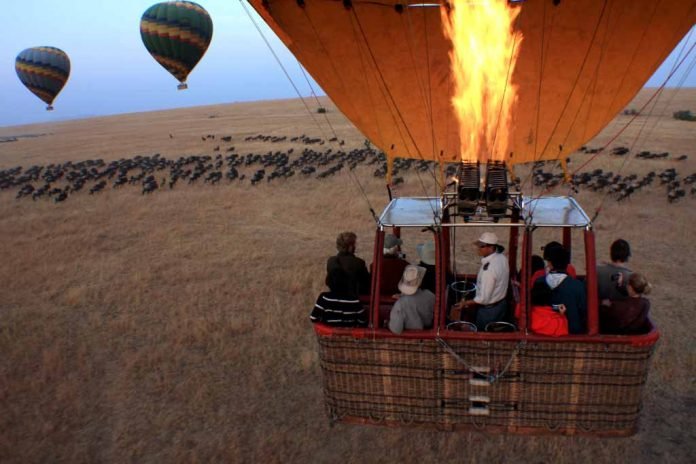
Rise early to be transferred to the hot air balloon launch site. The balloon flight takes off at sunrise, making the most of the soft morning light. Your flight lasts about an hour, after which you will be treated to a champagne bush breakfast; the perfect way to round off an experience of a lifetime.
Visit A Maasai Village -Take a village tour to a Maasai village where you will be greeted by the Maasai people and experience a traditional Masai village.
Go On A Game Drive – Accompanied by your professional guide, game drives, in customised, open safari vehicles are the perfect way to explore the grassland plains and discover the plentiful wildlife of the Masai Mara. Discover the Masai Mara in the privacy of your own private 4×4 and enjoy scenic drives across the plains, spotting birds and wild game.
Go On A Horse Riding Safari – Explore the Mara on horseback. Riding safari can be arranged in certain lodges and camps on the mara concessions and conservancies outside the main reserve.
Go On A Nature Walk – A must for those who love to be in wild and free places, get a sense of the vast wilderness in the Masai Mara. Your Masai Masai guide will take you on a 3km walk along the river, the Maasai Mara river, walking through dense vegetation, along
A Sundowner – An unforgettable sunset experience in the wild, a sundowner is a ‘happy hour’ during sunset over the African Bush as you round off your Afternoon Adventure on your Masai MaraSafari accompanied by a safari bar, light bites and the local wildlife and view.
The below safari essentials list is supplied as a guide on what to pack for Masai Mara Safari. Please ensure where possible that you keep your luggage to a minimum due to the weight / space restrictions of 15kg total weight allowance per person (including carry-on bags) on light aircraft and local airlines flying to and from Masai Mara.
That’s not to say that you can’t travel with luggage more than 15kg when you are headed to Masai Mara, its only a strict requirement when using an aircraft to get there.
Also depending on your travel arrangements most of your luggage can be left at you Nairobi hotel before heading to the Mara.
When packing for a Masai Mara safari, we recommend using soft-sided luggage for convenience and flexibility. Most safaris begin with a flight to Kenya’s international airport, followed by transfers on smaller safari planes to reach the lodges. These smaller aircraft have limited luggage compartments, necessitating the use of safari duffel bags that can easily be manipulated to fit into tight spaces.
Upon arrival at the airstrip near your safari camp, your luggage will need to be transferred to a safari vehicle. Soft-sided bags are more manageable and can easily fit into the vehicle’s storage areas. For these reasons, it’s advisable to avoid hard-shell suitcases, as they are heavier and less suited to the safari environment.
Below, we have recommended some soft sided and duffel bags that are perfect for your Masai Mara safari adventure.
As part of Kenya’s environmental initiative, the ban extends to single-use plastics in pristine environments that host a variety of iconic flora and fauna like Masai mara, including disposable plastic water bottles. Plastic pollution represents one of the most severe threats to global environmental health. Single-use plastics are contaminating ecosystems ranging from rainforests to the deepest parts of the ocean. When ingested by fish and livestock, plastic waste eventually enters our food chain.
Packing Checklist
This packing check list is a complete guide on what to take on your Masai mara safari.
Duffel Bag
Ripstop Wheeled Duffel, Telescoping Handle, 30″ Rating: 4.5 out of 5 stars (3,816 ratings) Price: $99.86 Color Options: Black, Blue, Red Size: 30″ (also available in 26″ and 35″) External Dimensions: 33’’ – 41″ x 16’’ x 14.5’’ (LxWxH) Interior Capacity: 87 Liters Weight: 10.6 lb or 4.81kg Features: Wheeled duffel in black for traveling in comfortable, convenient style. Durable design with 100% polyester top. Multiple zippered front and main compartments for easy organizing and secure storage.
Travel duffel bag
Wheeled duffel for traveling in comfortable, convenient style. Durable design with 100% polyester top. Multiple zippered front and main compartments for easy organizing and secure storage. This duffel bag is a great choice for your safari adventure, offering ample space, durability, and ease of transport.
Clear Toiletry Bag
One very important thing to have is a TSA approved clear toiletry bag, and this is essential for your Masai Mara and even a Kenya or Tanzania Safari packing list. As we mentioned above countries like Kenya have banned single-use plastic bags, inclusive of the ones provided by the airport because of environmental concerns.
Sports Bra
The roads to Masasi Mara are likely to be bumpy and you will thank me for adding a sports bra to your safari packing list essentials. They come in different colors, sizes, and shapes and needed for any occasion whether you’re running the Boston Marathon or a Masai Mara Safari.
Personal Toiletries
Other important items that you must include in your packing list includes personal toiletries (such as travel size shampoo, conditioner, soap, deodorant, moisturizer, hair brush, toothpaste and toothbrush), sanitary products for ladies, wet wipes and hand sanitizers, small sewing kit, small scissors and pocket knife (not in carry on bag) money pouch or money belt.
When embarking on a safari in the Masai Mara, staying hydrated is crucial, but so is ensuring the water you drink is safe. The Grayl Ultralight Water Filter Bottle is a must-have item for your packing list. This portable water purifier is designed to remove viruses, bacteria, and protozoa from natural water sources, making it ideal for outdoor adventures where access to clean water may be limited. With its simple press-to-purify system, you can fill up from any freshwater source and have safe, clean drinking water in just seconds. The Grayl Ultralight is not only effective but also lightweight and compact, making it easy to carry in your backpack without adding extra bulk. With the ban of single use plastic bottles in places like Masai Mara this would make a great water bottle.
Travel Mug
Pack a travel mug with a spill-proof lid to enjoy hot drinks during chilly morning drives.
Collapsible Water Bottle
Consider adding the Popdigito 2 Pack Collapsible Water Bottles. These innovative bottles are not only eco-friendly but also incredibly space-saving. The bottles can be folded down to just a few inches, making them perfect for saving space in your luggage. After you drink the water, you can collapse them to one-third of their size, freeing up valuable packing space. Made of food-grade BPA-free silicone, these bottles are safe, non-toxic, and odorless. The durable 3-ply material is built to last, reducing the need for disposable plastic bottles.
For your electronics including your phone and other rechargeable electronics, it is suggested that you confirm that your a/c adapter or battery charger works with 220 volts, and also bring a 3-pin square (UK) electrical adapter plug.
Neutral Coloured Cloths
So as not to be a target of the Tsetse fly, avoid very bright red colours or dark blue. For the evening clothes, if you stay inside of your camp or resort, focus on the light-coloured fabrics to not to attract mosquitoes. We offer a comprehensive guide on what to wear for your Mara safari for those interested in learning more.
Some light Clothing
Kenya is hot and at times a bit humid and you will need comfortable clothes that are not too warm especially during the day or too tight such that you can’t wear them for long. A normal day can range around in the 75° F / 24°C so dress appropriately for this kind of weather.
Warm Clothing
At dawn and in the late afternoon is when game drives are generally conducted. These periods can be cold, especially around July. The temperature often warms up during the day, so it is best to dress in layers.
Insect Repellent
Even though most of the lodges and camps in mara provide insect repellent we still encourage you to pack your own. One containing deet is the best since deet is said to be more effective against most insects and bugs on a Kenya Safari.
Sunglasses
Sunglasses are essential for protecting your eyes from the harsh sun and glare, especially in the open savannah of the Masai Mara. Look for polarized lenses to reduce glare and improve clarity, making it easier to spot wildlife and enjoy the stunning landscapes.
Hat
A wide-brimmed hat is crucial for safeguarding your face, neck, and ears from sunburn. The intense African sun can be unforgiving, and a hat provides much-needed shade, keeping you cooler and more comfortable during your safari adventures.
Binoculars are a must-have for any safari. We recommend the Occer 12×25 Compact Binoculars. These high-powered binoculars offer a 12x magnification and a 25mm objective lens, providing a wide field of view (273ft/1000yds) that allows you to observe animals from a safe distance without missing any details. The large eyepiece and adjustable eye cups make them suitable for both eyeglass wearers and non-wearers, ensuring comfortable and focused viewing. Equipped with FMC Broadband coating and premium BAK4 prism, these binoculars deliver clear and vibrant images, even in low light conditions. Their compact and lightweight design makes them easy to carry on your safari adventures, and the durable, waterproof construction ensures they can withstand the elements.
Power Bank
A reliable power bank is essential for keeping your devices charged while on the go. In the Masai Mara, access to electricity may be limited, especially if you’re staying in remote camps or lodges. A high-capacity power bank ensures that your camera, phone, and other essential gadgets have enough power to last through your safari, so you can capture every moment.
Swimming Costume
Many lodges and camps in the Masai Mara have swimming pools where you can relax and cool off after a day of game drives. Packing a swimming costume ensures you’re prepared to take advantage of these facilities, providing a refreshing break from the heat and a chance to unwind in a beautiful setting.
Adding to your safari essentials, the AICase Waterproof Phone Case is not only valuable for your Masai Mara adventure but also for any beach trips or rainy days. This universal underwater pouch is compatible with a wide range of smartphones, ensuring your device stays dry and functional in various wet environments. Whether you’re swimming in the lodge pool, visiting coastal regions, or caught in a sudden downpour, this case protects your phone from water, dust, and sand. Its unique vacuum seal technology maintains touch screen sensitivity, allowing you to use your phone as usual, even underwater. This feature is particularly handy for capturing underwater photos or videos without worrying about damaging your device. The case also comes with a lanyard for easy carrying, making it a convenient and versatile accessory for all your travel needs.
Avoid overweight baggage fees with the Etekcity luggage scale. Accurate and easy to use, the perfect travel companion to avoid unexpected overweight baggage fees. This compact and user-friendly scale can easily fit in your pocket, making it a must-have for any traveler. Hook your suitcased for instant weight and save time before you wait in line.(Using a 2mm Phillips screwdriver with 4 points when replacing the battery) The travel sacle has 110lb/50kg weight capacity & 0.1lb/50g graduation,it also can measure the ambient temperature
Some Medicine
This is just a fancy way of saying ‘meds’ – stuff you need, just in case the worst happens: diarrhea, headaches, heartburn, insect repellent, hand sanitizer, bites (antihistamine), indigestion, sore throat (lozenges), eye drops, and most important – anti-malarial tablets.
Here Are Some Essential Tips To Keep In Mind
When embarking on a safari in the Masai Mara, it’s important to be well-prepared to ensure a comfortable and enjoyable experience. Here are some essential tips to keep in mind:
Technology and Power:
Bring an external battery pack to keep your devices charged during long game drives.
Consider carrying a power bar to expand the number of available outlets for charging multiple devices.
For travelers from North America, use Apple cubes for charging, as they have built-in transformers suitable for the 240-volt outlets in Kenya.
Personal Comfort:
Pack a travel mug with a spill-proof lid to enjoy hot drinks during chilly morning drives.
Dress in layers to adapt to the changing temperatures throughout the day. A sweater or windbreaker jacket is essential for the cool mornings.
A poncho or blanket can provide extra warmth during early morning game drives. Some camps provide hot water bottles for added comfort.
Health and Safety:
Don’t forget to bring sunscreen to protect your skin from the strong African sun.
Carry bug spray to ward off insects, although most camps provide their own version.
Ensure you have a comprehensive travel insurance policy that covers medical emergencies and evacuation.
Safari Schedule:
Be prepared for early mornings, as game drives typically start around 5:30 AM to catch the wildlife when they are most active.
Afternoon game drives usually begin between 4:00-5:00 PM and last until sundown, offering another opportunity to see the animals in their natural habitat.
Relax and unwind during the midday heat, as many camps have swimming pools for guests to enjoy.
Tipping:
Don’t forget to tip the safari staff and drivers. Tips are usually given separately and are a way to show appreciation for their service.
Packing Essentials:
Use soft-sided luggage for easier handling on small aircraft and safari vehicles.
Remember the ban on single-use plastic bags in Kenya. Opt for reusable bags and containers.
Pack a Grayl Ultralight Water Filter Bottle to ensure access to safe drinking water.
While packing all your safari essentials, it’s crucial not to overlook your digital security. The Wi-Fi available in hotels and lodges during your safari will often be public, making it vulnerable to security threats. This is where having a VPN becomes essential, especially if you plan to make online payments or handle sensitive information.
Using a VPN like NordVPN on your devices offers numerous benefits for travelers:
Encrypts your internet connection, ensuring that your personal data is protected from cyber threats like hacking or identity theft.
Accesses geo-restricted content, such as your favorite shows or news services that may not be available abroad.
Secures your financial transactions, which is crucial when booking tours, accommodations, or managing finances far from home.
Maintains privacy by hiding your IP address, making your online actions less traceable.
By including a VPN in your travel toolkit, you ensure that your adventure in the Masai Mara is not only memorable but also secure, keeping your digital life safeguarded against potential online risks. This added layer of security will let you enjoy your safari without worrying about your online safety.
By following these tips, you’ll be well-equipped for an unforgettable safari experience in the Masai Mara. Enjoy the adventure and the incredible wildlife sightings that await you!
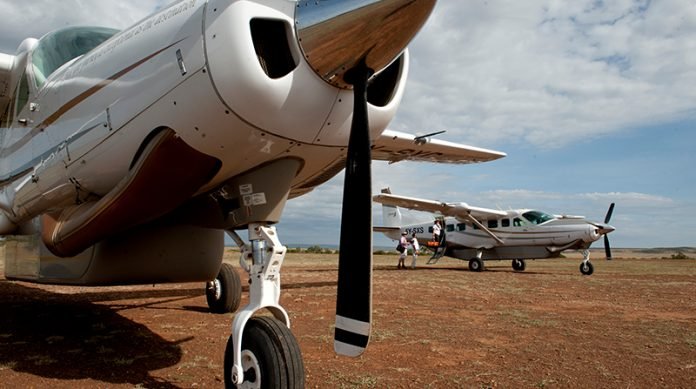
A Kenya Safari Masai Maracan be by road or by flight. There are a List of airstrips in Masai mara spread out in the park, with a good number of domestic scheduled flights operating between Wilson airport in Nairobi and other airstrips around the reserve taking only 45 minutes.
Carriers, such as Air Kenya, SafariLink and Governors Aviation, who also serve other airports in and around the country. These carriers will also make several stops to several of these airstips on a single trip. The nearest international airport to Masai Mara is the Jomo Kenyatta International Airport in Nairobi.
Why Are There So Many Airstrips In Masai Mara?
The distances between some of these safari camps and lodges in mara are quite huge and that is why there are several airstrips in Masai Mara. So the airstrip you use depends on which camp or lodge you are going to.
Below are the various airstrips in the Masai Mara National Reserve.
Are There Midday flights To Masai Mara?
Yes this is however only during Kenya’s peak tourist season and is usually in response to the sheer volume of passengers flying to Masai Mara during the peak season months from July to October.
At this time of the year, Safarilink and Air Kenya usually have an additional midday flight service to handle the passenger numbers.
Keekorok Airstrip
Keekorok airstrip is located in the south east of Maasai Mara Game Reserve, It mainly serves Keekorok Lodge, Mara Sarova Game Lodge, Sekenani Camp, Mara Sopa Lodge, Ashnil Camp, Cottars Camp, and Mara Topi Safari Lodge.
Kichwa Tembo Airstrip
Kichwa Tembo Airstrip is a private airstrip within Masai Mara National Reserve’s northern boundary. Those on a Masai Mara Fly In safari often use Kichwa Tembo to shorten their travel time when going to Kichwa Tembo Camp, Bateleur Camp, Kilima Camp, Mpata Lodge among others.
Ol Kiombo Airstrip
Ol Kiombo Airstrip is located in the North of Talek River serving guests staying at Porini Lion Camp, Fig Tree, Mara Explorer, Naibor Camp, Mara Intrepids, Base Camp, Kicheche Bush Camp, Nyumbu Camp and Rekero Camp.
Mara Serena Airstrip
Mara Serena Airstrip is an all weather gravel airstrip serving tourist flights to Masai Mara. Located in the south western part of Masai Mara, just near the Kenya-Tanzania border, Mara Serena airstrip is the largest civilian airstrip in Maasai Mara National Reserve. It mainly serves Mara Serena lodge.
Mara North Airstrip
Mara North airstrip is an airstrip inside the Mara North Conservancy, which is used by travellers visiting the Mara North Conservancy, and also parts of the mara.
Guests staying at the Kicheche Mara Camp, Saruni Wild Camp and Saruni Mara Camp use Mara North airstrip.
Angama Airstrip
Angama mara airstrip is a small airstrip near Angama Mara in Narok County, Kenya. This airstrip mainly serves Mara Angama Lodge, Mara West Camp and other neighbouring lodges/camps.
Musiara Airstrip
This airstrip serves Governor’s Camp, Moran Camp, Serian Camp, Little Governor’s Camp and Neptune Mara Rianta Camp.
Siana Springs Airstrip
This airstrip is located in the Siana Group Ranch. The airstrip mainly serves Siana Springs Camp, Mara Bushtop, Porini Main Camp, Ol Seki Hemingways Mara and Leleshwa Camp.
Ngerende Airstrip
Ngerende Airstrip serves visitors staying at Ngerende Island Lodge, Kicheche Mara Camp, Mara Safari Camp, Saruni Camp, Lokoswan Camp and Richards Camp.
Olare Orok airstrip
Olare Orok airstrip is an aristrip located within the Olare Motorogi Conservancy which is to the north of Kenya’s Maasai Mara Game Reserve. The Airstrip serves camps within the Orok Conservancy such as Mahali Nzuri Safari Camp.
Mara North Airstrip
Mara North Airstrip is located inside Mara North Conservancy serving Kicheche Mara Camp, Saruni Mara Camp and Saruni Wild Camp.
It is important to book your masai mara safari as early as possible if you will be traveling during the peak season. This ensures you will be able to get the safari camps and lodges that you plan on staying.
South Africa is a country with stunning and extremely diverse scenery, from the table mountain in cape town to the sparkly jewel that is the Eastern Cape and pristine bush in parks such as Kruger, and finally spectacular cost line, South Africa makes an excellent choice for any horse riding adventure. In South Africa, there is something for everyone from the budget traveler to those seeking a luxury south africa safari.
What’s the best place to horse ride in South Africa?
South Africa has the widest range of horse riding experiences when compared to Kenya,Namibia, Tanzania or even Botswana. To pick the Best place for a horseback experience in South Africa is almost impossible but we give you several options and places that will not only excite you but also take into account your riding skill level.
The quality of horses, guiding and accommodation and value for money can match those anywhere in the world.
Horse Riding While On Safari
Lodge based riding is ideal not just for individuals but also for the whole family. Why not combine your Africa family holiday with a riding safari where you can return to the comfort of your lodge at the end of the day.
After a horseback safari enjoy an evening sundowner or maybe enjoy some more relaxing activities such as a swim at the pool. If you are a parent, there are daycare services on site where you can leave the children.
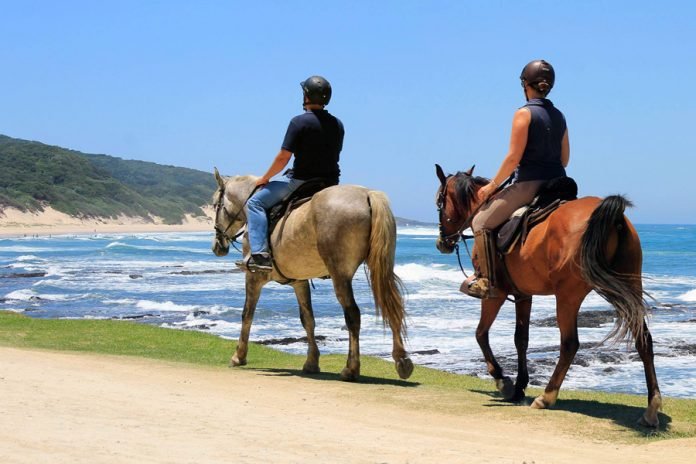
There are many different styles of horse riding you can choose from such as bareback riding where the horse will walk along the sand and beach, pony trekking where a horse will trot along a sand beach, cross-country riding for an even longer adventure where horses and riders will travel on the sand dunes and plains.
Exploring Nature On Horseback
Some of the places you can visit on a horse safari in South Africa are Blyde River Canyon, Kruger National Park, Leopard’s Peak, and the Makulu-Sesrile National Park. During your horse safari, you will have plenty of time to enjoy both the outdoors and learning a lot about the different plants and animals you encounter.
Horse Riding On The Beach
Horse riding in the beaches of South Africa is a bucket list activity that deserves to be on the top of everyone’s to-do list. Riding through the sand on the reins of your horse while the sun sets over arid plains and seeing the awe-inspiring mountains in the distance is something everyone must experience. Whether it be watching the sunset or a zebras grazing along the shore of a river, this is the perfect vacation you were looking for.
Horseback Riding Cape Town
Cape Town offers horseback riding along the Cape Point coastline, a beautiful vantage point with the Atlantic Ocean below and the mountain of Table Mountain peaking into the world above. Horseback riding in Cape Town is enjoyed by visitors and locals while they take in the beautiful landscapes. There are also advanced riding lessons, complete riding packages, and unforgettable horseback riding experiences on offer.
There is so much things to see and to in South Africa no matter what your interests are, there’s sure to be something for you in this diverse and beautiful country. Talk to us today to start planning your perfect trip.
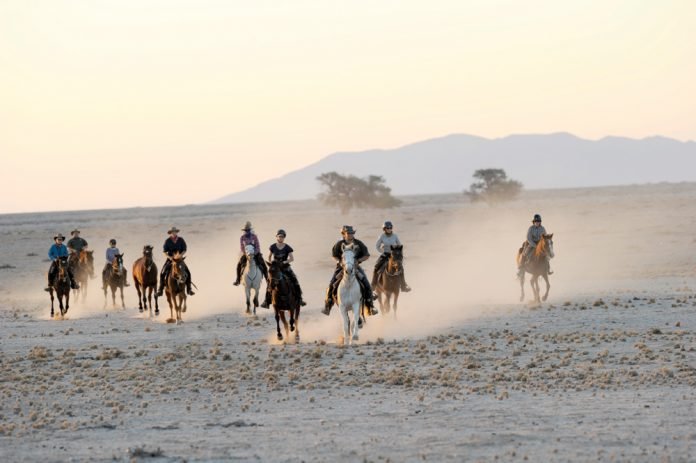
African Horse Safaris are proving to be one of the best ways to experience an African Safari Adventure, blending world-class safari guides with luxury safari lodges and, of course, the chance to spot buffalo, elephant, leopard, rhino and even lions from the saddle.
The difference between a typical safari and a horseback safari is that unlike on a land cruiser where you can sometimes feel like a passive observer, on horseback the African landscape embraces you wholeheartedly.
A horseback safari in Africa is so much more than a ride through the bush – it is a completely unique and all-encompassing wildlife safari experience. Horses are exquisite creatures that move gracefully across the terrain in a manner that eases your mind, and often gets you closer to the wild animals than you normally would on safari vehicle.
Some of our African Riding safaris destinations are Kenya, Botswana, South Africa and Tanzania where you will find a string of top quality horses to suit experienced riders – these rides take you into the most game rich areas of Kenya, Botswana, South Africa and Tanzania.
Okavango Horse Safaris
The Okavango Delta in Botswana is thought to be the origin of Africa riding safaris as we know them today. A trip here has everything you could want from a horseback safari. Seated high above the long grass and reeds of the Okavango Delta riders see giraffe, elephant, buffalo, Zebra and even lion. It offers some fantastic horses in game filled areas of the Delta and one can even go swimming through the Delta on horseback unforgettable experience.
Combine this with luxury bush camps and you have a riding experience of a lifetime.
Serengeti Horse Safaris – Wildebeest Migration
In northern Tanzania, the Serengeti spans approximately 12,000 square miles across the border between Kenya and Tanzania. The Loliondo Controlled Area adjoins the Serengeti-Mara ecosystem and Ngorongoro Conservation Areas and teems with magnificent wildlife. On the eastern corridor of the Serengeti this area offers an adventurous horseback safari; an incredible opportunity to indulge your sense of adventure off the beaten track.
This safari can be timed to give you the best chance of seeing the wildebeest migration as they head to Kenya or return from Kenya’s Masai Mara to the grassy plains of the Serengeti.
Horseback Safari Kenya
Kenya offers some outstanding horse riding safaris. Sosian offers a great variety of riding for experienced riders, across open plains filled with warthogs, zebra, buffalo, giraffe, eland and gazelle and scenic views of Mt Kenya.
Ol Donyo Lodge is situated on the southwestern side of the Chyulu Hills in southeast Kenya, within a limitless expanse of plains is perfect for those who are looking for a fantastic riding safari with Mount Kilimanjaro as the back drop.
This lodge is renowned for its outstanding horse safaris – whether you are a beginner or an advanced rider, There are horsesand rides to suit all levels of experience.
Masai Mara Horse Safaris
Explore Masai Mara’s iconic plains on horseback and enjoy exciting wildlife encounters. Imagine riding a horse as impalas leap and gazelles graze around you getting even closer to you than they would a safari vehicle.
There are a number of great opportunities to ride alongside the wildlife in Kenya’s iconic Masai Mara. The Mara never fails to deliver outstanding game viewing from horseback, all year round.